6 min read · Dry Eye Clinic
What actually causes dry eye — and how we find out.
Dry eye is rarely just “not enough tears.” In most patients the tear film is being disrupted by something specific — blocked oil glands, inflammation, or an unstable eye surface. Finding which one changes the treatment entirely.
Most people arrive describing the same handful of things: eyes that burn by mid-afternoon, blur that clears when they blink, or a gritty feeling that no amount of over-the-counter drops seems to fix. What surprises them is that dry eye is a measurable condition with identifiable causes — not a vague complaint they have to accept.
This article explains what your tear film does, why it stops working, and what testing during a dry eye evaluation is actually looking for. If you would rather go straight to scheduling, you can read about the Dry Eye Clinic instead.
Your tears are doing more work than you think
The layer of moisture across the front of your eye is not simply water. It has structure, and each part has a job. When one part fails, the whole film becomes unstable — which is why symptoms can feel inconsistent from hour to hour.
- An oil layer on the outside that slows evaporation.
- A watery layer that carries nutrients and rinses the surface.
- A mucus layer that helps everything spread evenly and stay put.
If the oil layer is thin, tears evaporate too quickly and your eyes feel dry even though they may water constantly. That contradiction — watery eyes that still feel dry — is one of the most common reasons patients delay getting evaluated.
“Watering eyes are often a dry-eye symptom, not the opposite of one. The eye is reacting to an unstable surface.”
The symptoms patients describe most
You do not need every one of these to have dry eye. A pattern of two or three, especially if they worsen through the day, is usually enough reason to be evaluated.
- Burning, stinging, or a sandy feeling
- Vision that blurs and then clears when you blink
- Sudden watering, especially outdoors or in wind
- Trouble tolerating contact lenses you used to wear comfortably
- Eyes that feel heavy or tired after screen work or driving
- Redness along the eyelid margins
Two different problems, often confused
Broadly, dry eye falls into two categories — and many patients have some of both. Treating the wrong one is why drops alone so often disappoint.
| Type | What is happening | Typical direction of care |
|---|---|---|
| Evaporative | Oil glands in the eyelids are blocked or underproducing, so tears evaporate too fast. | In-office gland treatment, lid therapy, warm compression routines. |
| Aqueous deficient | The eye is not producing enough of the watery portion of tears. | Prescription therapy, tear conservation, addressing contributing health factors. |
| Mixed | Features of both, frequently with surface inflammation present. | Layered plan, sequenced and adjusted at follow-up. |
General categories only. Your evaluation determines which findings apply to you.
What we do during an evaluation
A dry eye evaluation is longer than a routine exam because we are measuring, not guessing. Nothing in it is painful, and you can drive afterward.
- We talk through your symptoms. When they started, what makes them worse, medications you take, and how they affect your work and driving.
- We examine the eye surface and eyelids. Under magnification your doctor looks at the tear film, the cornea, and the openings of the oil glands.
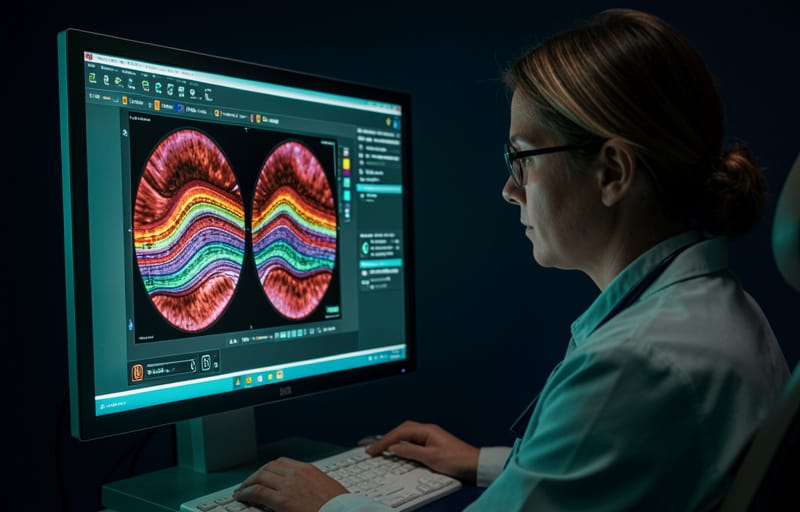
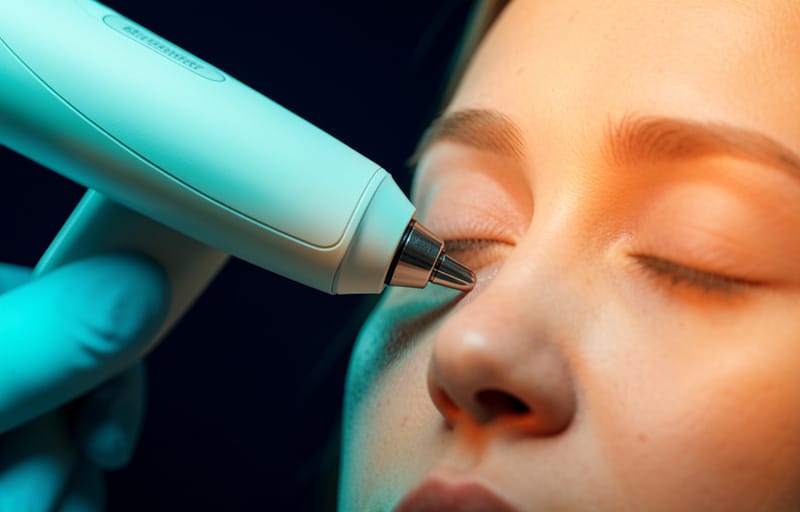
- We image the oil glands. Imaging shows the structure of the glands inside the lids, which a standard exam cannot reveal.
- We measure tear stability and quantity. This tells us how quickly the film breaks down and whether production is part of the problem.
- We explain the findings and build a plan. You see your own results and leave knowing the next step and roughly what it involves.
A gentle dye is often used
A drop of harmless dye makes the tear film and any surface irritation visible under blue light. It stings for a moment at most and clears on its own. It is one of the fastest ways to see how healthy the eye surface really is.

Diagnostic dye under blue light helps reveal how evenly the tear film covers the eye.
How to prepare
- Skip eye makeup on the day of your appointment if you can.
- Bring the drops you have already tried, including the boxes.
- Bring a current medication list — several common prescriptions affect tear production.
- If you wear contacts, bring your glasses as well.
Why treatment usually takes more than drops
Artificial tears add moisture temporarily. They do not open a blocked gland or reduce inflammation on the eye surface. That is why patients often feel better for twenty minutes and then right back where they started.
When we know which mechanism is driving your symptoms, treatment can address it directly — and follow-up measurements confirm whether it is working rather than relying only on how you feel that day.

Drops still have a role — but usually as part of a plan, not as the plan itself.
Questions patients ask
Will one visit fix it?
Usually not, and that is normal. The first visit identifies the cause and starts treatment. Most patients notice meaningful change over several weeks, with a follow-up to measure progress and adjust.
Is any of the testing uncomfortable?
No. Imaging is done with your eyes closed or gently held open, and the dye may sting briefly. There are no injections and no dilation required for the dry-eye portion of the visit.
Does insurance cover a dry eye evaluation?
Dry eye is a medical condition, so it is often billed to medical insurance rather than a vision plan. Coverage varies by plan. Call the office and our team will check before your visit.
If any of this sounds like what you have been dealing with, the next step is straightforward: request a dry eye evaluation and we will take it from there.