Our entire staff at Vision Center of Santa Maria is bilingual in English and Spanish. Not one interpreter, and not one person at the front desk. The whole team. It is one of several things worth asking about when choosing an optometrist in Santa Maria.
That sounds like a small operational detail. In practice it changes the whole visit.
Why it matters more than a sign in the window
Plenty of offices can greet you in Spanish and then hand you an English form, or find someone to translate the part where the doctor explains what he found.
Eye care is full of moments where precision matters:
- Describing a symptom accurately, including when it started and what makes it worse
- Listing your medications, several of which affect tear production
- Understanding what a test is for before you agree to it
- Hearing what the doctor found and what he recommends
- Sorting out what your insurance covers
- Explaining how to wear and care for contact lenses
- Choosing frames and understanding lens options
If any one of those happens through a gap in language, the visit is worse. Not necessarily wrong, but thinner than it should be.
Where you will notice it
Scheduling and check-in
You can book, ask about your coverage, and check in without switching languages or waiting for someone to be found.
Pretesting
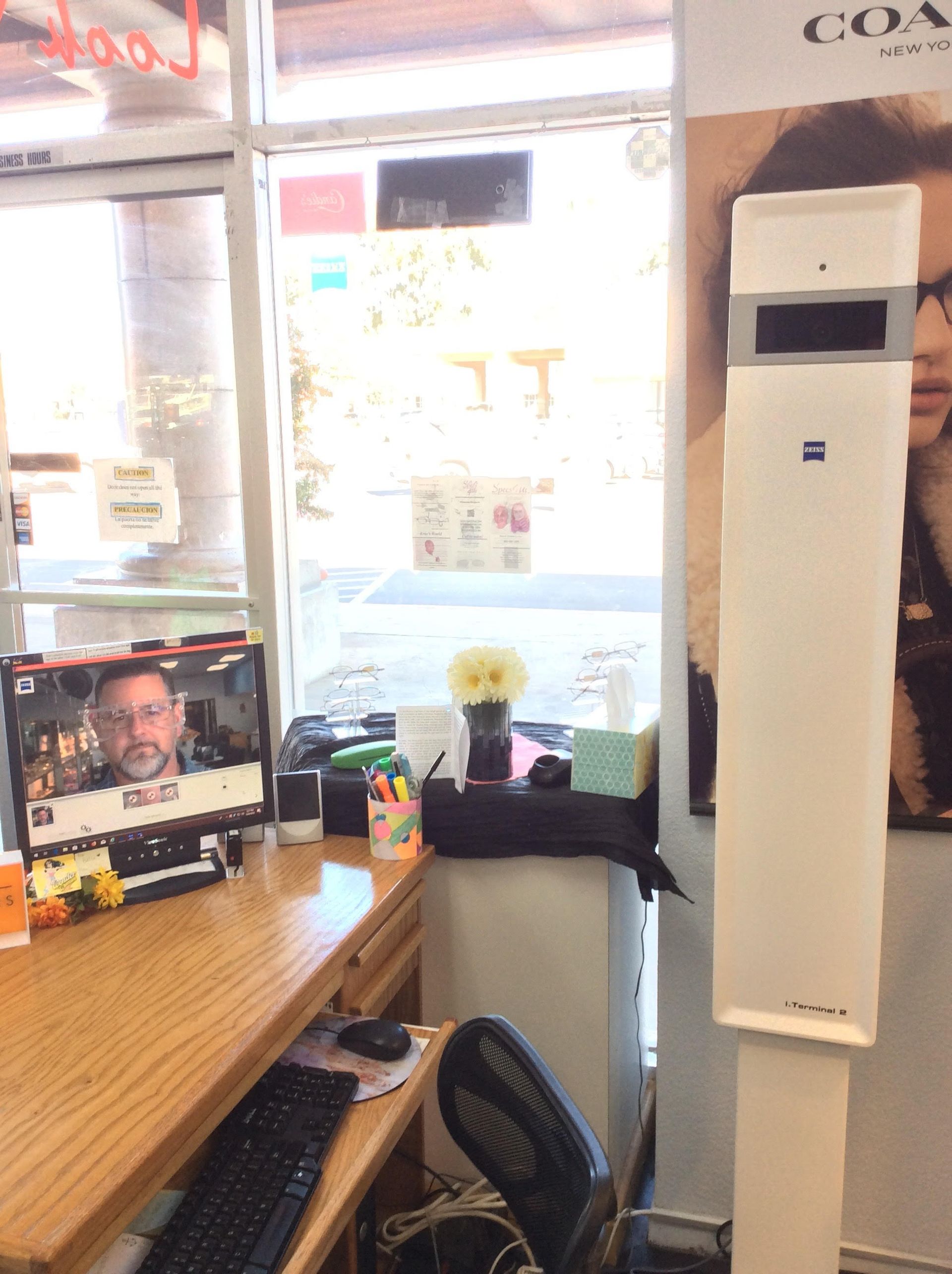
The technician taking your preliminary measurements can explain each step as it happens.
The exam
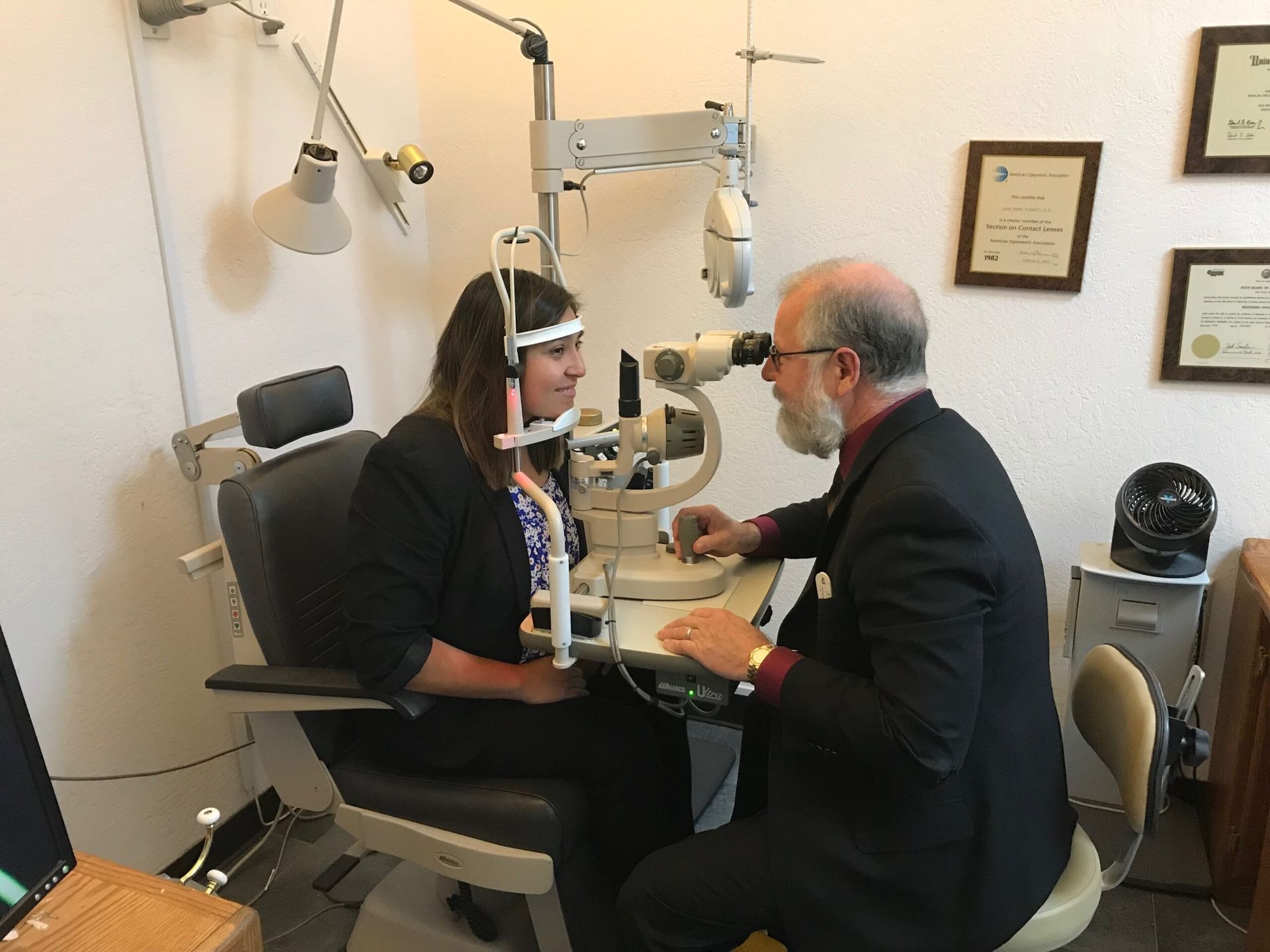
Dr. Prewett explains what he is checking and what it means. We would rather you understand why a test is being recommended than only the name of the machine.
The optical
This is the one people forget. Choosing frames, understanding progressive lenses, and knowing which coatings are worth it all involve real conversation. See personalized eyewear and lenses.
Insurance
Coverage questions are hard enough in your first language. See does CenCal/Medi-Cal cover eye exams and glasses.
Bringing family members
Many families bring a bilingual adult child or relative to translate at medical appointments. You are welcome to bring anyone you like, and a second set of ears is often useful regardless of language.
But you should not have to. A child should not be the one explaining a parent's diagnosis, and a parent should not have to decide whether a question is worth the trouble of asking.
For children's exams
This matters particularly for pediatric visits, where the useful information comes from parents describing what they have noticed at home.
Signs that a child may need an exam are subtle: squinting, sitting close, head tilting, avoiding reading. Those details get lost in translation more easily than a chart reading does. See signs a child may need an exam and when children should receive an eye exam.
Common questions
Do I need to request a Spanish-speaking staff member?
No. Everyone here is bilingual, so there is nothing to arrange in advance.
Can my paperwork be explained in Spanish?
Yes. Ask at the desk and someone will go through it with you.
Can the doctor explain findings in Spanish?
Yes, and you should ask him to repeat anything that is not clear. That is a normal request, not an imposition.
Do you accept CenCal/Medi-Cal?
Yes, for patients of all ages, and Medicare as well. See what Medicare covers.
Schedule an appointment
Call 805-925-9575 or request an appointment. We are at 1429 S. Broadway in Santa Maria.
Hable con nosotros en el idioma que prefiera.