A vision screening is a quick check for whether you might have a problem. An eye exam finds out what the problem is, and whether your eyes are healthy.
A screening can only fail you or pass you. It cannot tell you why.
What a screening actually measures
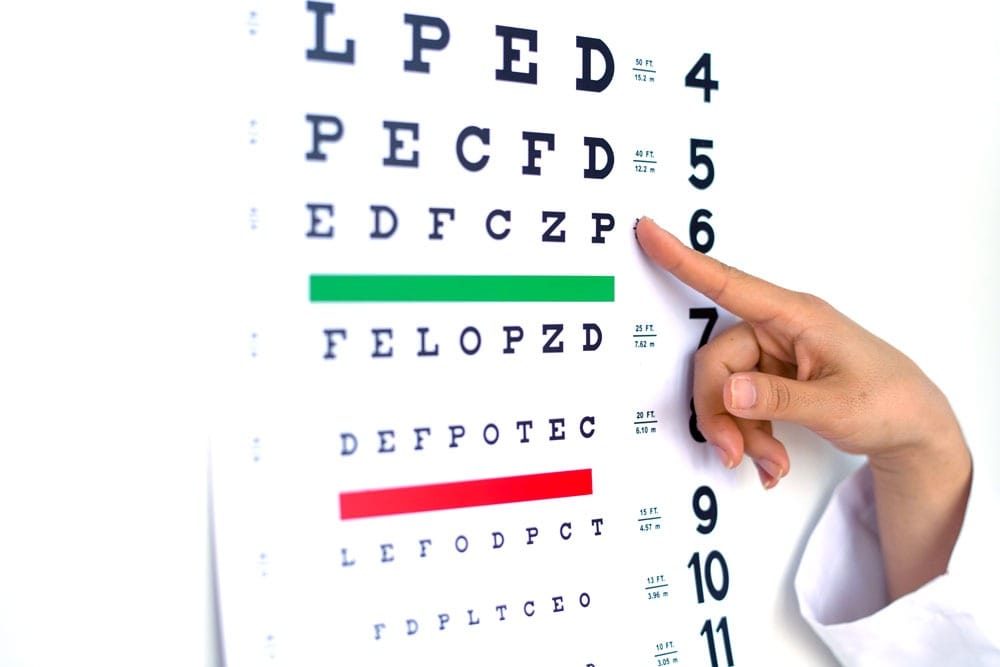
Most screenings check one thing: how well you read letters at a distance.
That covers a narrow slice of vision. It is genuinely useful for catching obvious problems in a large group quickly, which is why schools, workplaces, and the DMV use them.
What a screening does not evaluate:
- How your eyes focus up close, and whether they hold that focus comfortably
- How the two eyes work together as a pair
- Eye pressure
- The health of the retina and optic nerve
- The tear film and front surface of the eye
You can pass a distance chart with all of these going wrong.
What an exam adds
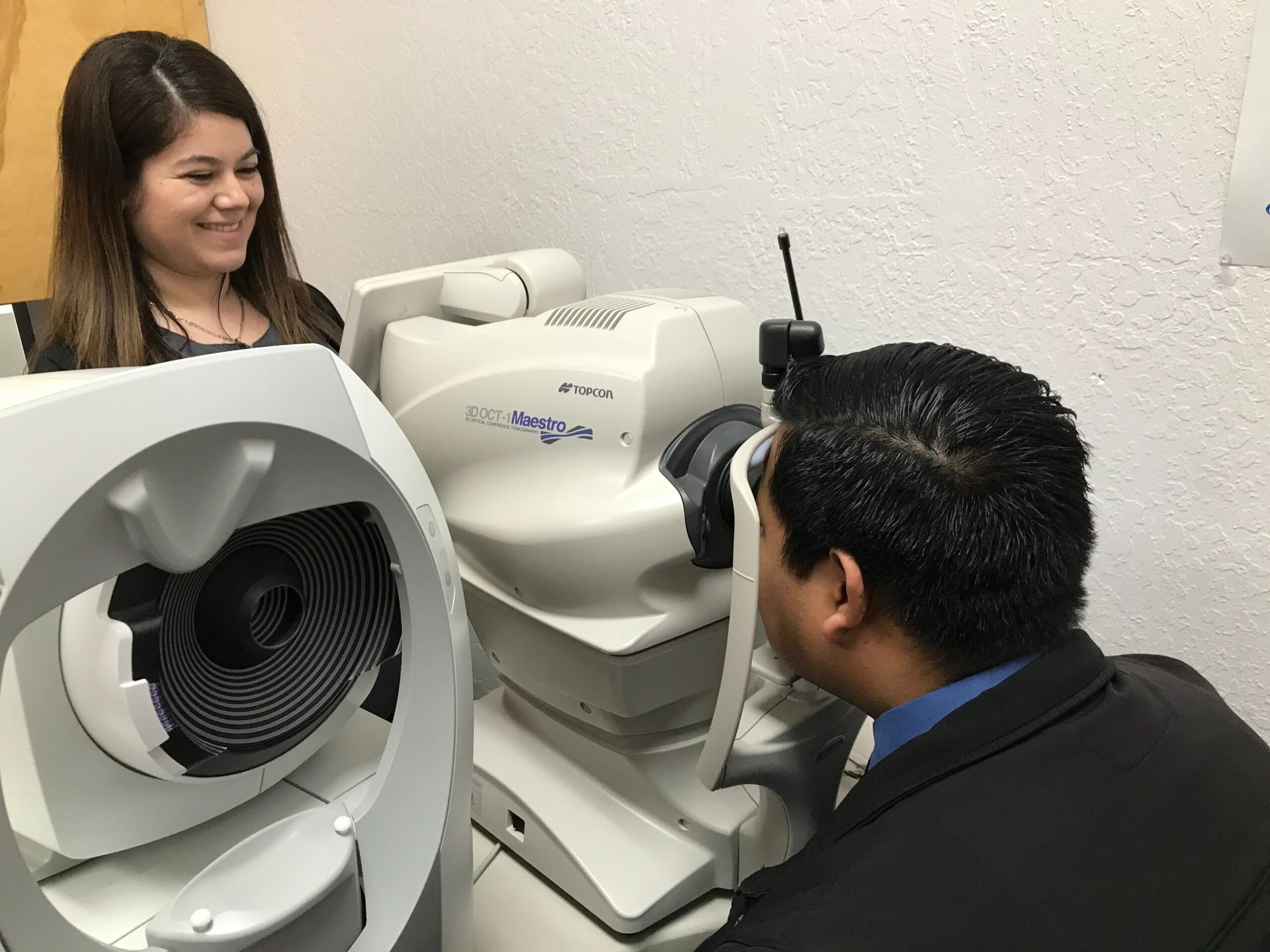
A comprehensive exam measures the prescription properly and then examines eye health. Pretesting gives the doctor a starting point, Dr. Prewett refines the prescription, and then he looks at the eye itself.
Many eye conditions cause no symptoms early on, and several cause no change in how sharply you see until they are advanced. Checking health at every visit is how those get found. The full sequence is in what happens during a comprehensive eye exam.
Where people run into this
At school
This is the most common one, and it matters most because children rarely report vision problems. See when children should receive an eye exam and signs a child may need an exam.
At the DMV
A license screening confirms you meet a minimum standard for driving. It is not a health check, and it is not a prescription check.
At work or a health fair
Useful as a prompt. If a screening suggests something, that is a reason to be examined, not a diagnosis.
At a pediatrician or primary care visit
Often a brief acuity check. Helpful, but not a substitute for an eye exam.
When a screening result should prompt an exam
Come in if:
- You did not pass, or the result was borderline
- You passed but something still feels off
- You have not had an actual eye exam in several years
- You have diabetes, high blood pressure, or a family history of glaucoma, regardless of the screening result
That last one is worth repeating. A screening result has no bearing on whether diabetes is affecting your retina. See medical eye care.
Common questions
I passed a screening. Do I still need an exam?
If it has been years, yes. The screening told you that you can read a chart. It did not tell you that your eyes are healthy.
Is a screening useless then?
No. It is a filter, and it catches obvious problems. The mistake is treating a pass as a clean bill of health.
How often should I have a real exam?
It depends on your eyes, age, and health. The doctor will give you an interval rather than leaving it open.
Do you see patients of all ages?
Yes. Children, adults, and seniors. See family eye care.
Schedule an exam
If the last check on your eyes was a chart on a wall, it is worth having them examined properly.
Request an appointment or call 805-925-9575.