Most bumps on the eyelid come from a blocked oil gland. They are common, usually not dangerous, and most settle with warm compresses and time.
The ones worth having examined are the ones that do not follow that pattern.
Stye or chalazion
The two get used interchangeably, but they behave differently.
A stye is an acute, tender infection of a gland at the lid margin, usually near the lashes. It is red, sore, and often comes up over a day or two. It can point like a small pimple and drain on its own.
A chalazion is a firmer, usually painless lump further back in the lid. It happens when an oil gland blocks and its contents build up. It often follows a stye that has settled, and it can persist for weeks or months.
Painful and new suggests a stye. Firm, lingering, and not especially sore suggests a chalazion.
Why they happen
The underlying issue is usually the meibomian glands, the oil glands lining your eyelids. When the oil thickens or the openings block, contents back up.
That is the same mechanism behind a lot of dry-eye symptoms, which is why people who get recurring styes often have gritty, burning eyes as well. See what is meibomian gland dysfunction.
Inflammation along the lash line, poor lid hygiene, leaving eye makeup on overnight, and sleeping in contact lenses all make it more likely.
What helps at home
Warm compresses are the main thing, and most people underdo them. A clean, comfortably warm compress held on the closed lid for around 10 minutes, several times a day, softens the blocked oil so it can move.
Gentle lid hygiene along the lash line keeps the openings clear.
Gentle massage toward the lid margin after a compress can help the gland drain.
Leave it alone otherwise. Do not squeeze or lance it. Squeezing can push infection into surrounding tissue and turn a small problem into a larger one.
Pause eye makeup and contact lenses until it settles.
When to have it looked at
Come in if:
- It is not improving after a week or two of consistent compresses
- It is getting larger, more painful, or more red
- The redness and swelling spread beyond the lid onto the cheek or around the eye
- Your vision changes, or the lump is large enough to press on the eye
- You have a fever alongside it
- You get them repeatedly
- A lump on the lid changes in appearance, bleeds, or causes lashes to fall out
The last two matter for different reasons. Recurring bumps usually mean the underlying gland problem needs treating rather than each bump being handled separately. A lesion that changes appearance or causes lash loss should be examined to make sure it is what we think it is, since eyelid skin is a common site for skin changes.
Spreading redness and swelling around the eye should be seen promptly rather than waited out.
What we can do
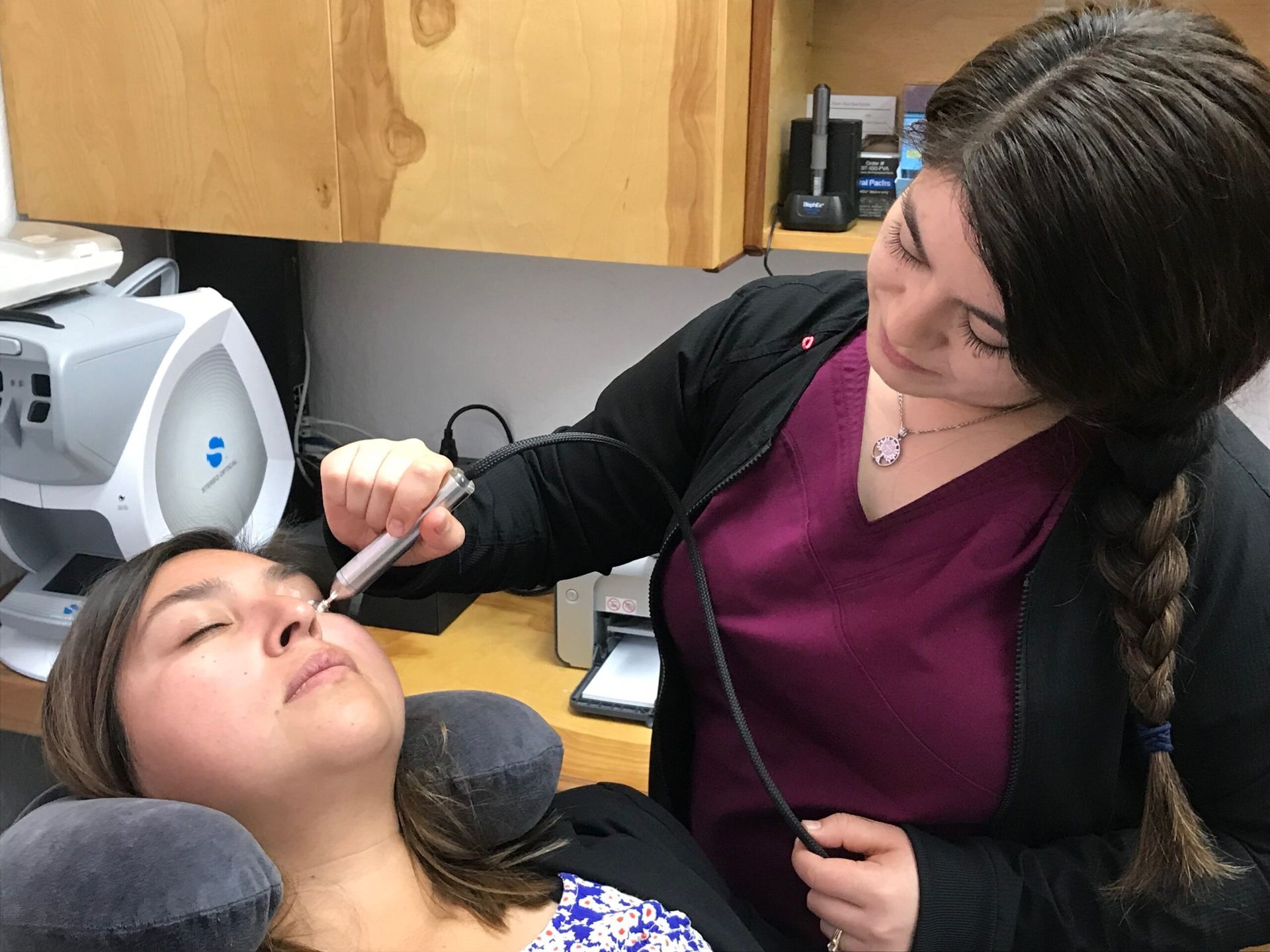
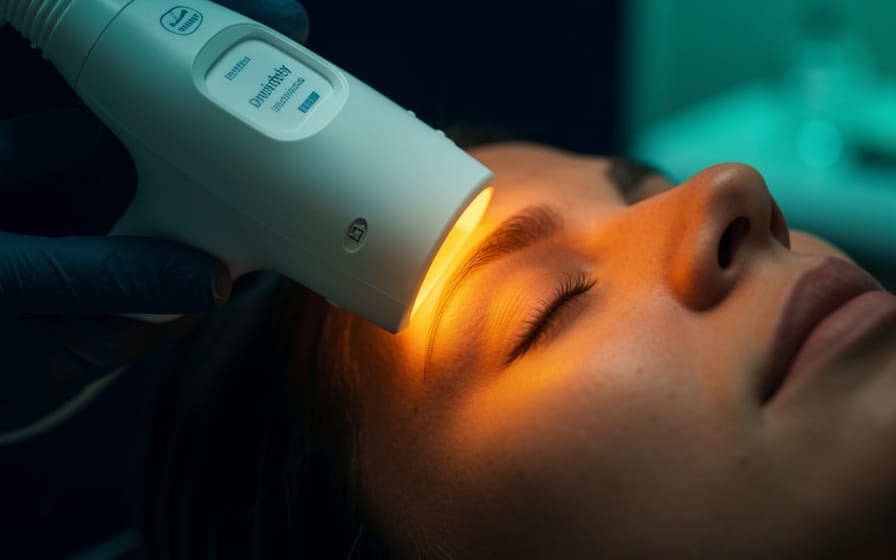
We examine the lid and the gland openings under magnification and determine what the lump actually is. Depending on what we find, treatment may involve prescribed medication where appropriate, in-office treatment aimed at the glands themselves, or referral if a lesion needs it.
For people who get them repeatedly, treating the underlying gland dysfunction is the part that actually changes the pattern. That is what our dry-eye clinic is set up for. See dry eye treatment.
Common questions
Are styes contagious?
Not in the way pink eye is, though the bacteria involved are common on skin. Wash your hands and do not share towels or makeup.
Can I wear makeup?
Not until it settles, and replace any eye makeup that was in use when it started.
Will it leave a lump?
A chalazion can take weeks to fully resolve and occasionally leaves a small firm nodule. If one persists, come in.
My eyes are also gritty and burning.
That points at the gland problem underneath. See common causes of dry, gritty, or watery eyes.
Get it examined
If a lid bump is not settling, or you keep getting them, we can look at what is driving it.
Request an appointment or call 805-925-9575.