The Central Coast has a mild climate, and that is exactly why people underestimate it. Comfortable temperatures and frequent overcast mornings do not mean low ultraviolet exposure.
Between coastal wind, time outdoors, and a lot of driving, eyes here take more than the weather suggests.
Cloud cover is not UV cover
A substantial amount of UV passes through cloud. A grey morning at the coast can still deliver meaningful exposure, and because it does not feel bright, most people do not reach for sunglasses.
UV also reflects. Water, sand, pavement, and light-colored surfaces bounce it back up at you, so the shade of a hat brim helps less than you would hope on its own.
Why it matters over time
UV exposure is cumulative. What you get in a single afternoon is rarely the issue. What accumulates over decades contributes to changes we watch for later:
- Cataracts, where the lens inside the eye gradually clouds
- Growths on the eye surface, including pterygium, which is associated with long-term sun, wind, and dust exposure
- Damage to the eyelid skin, a common site for skin cancers
- Retinal changes, where UV is one contributing factor among several
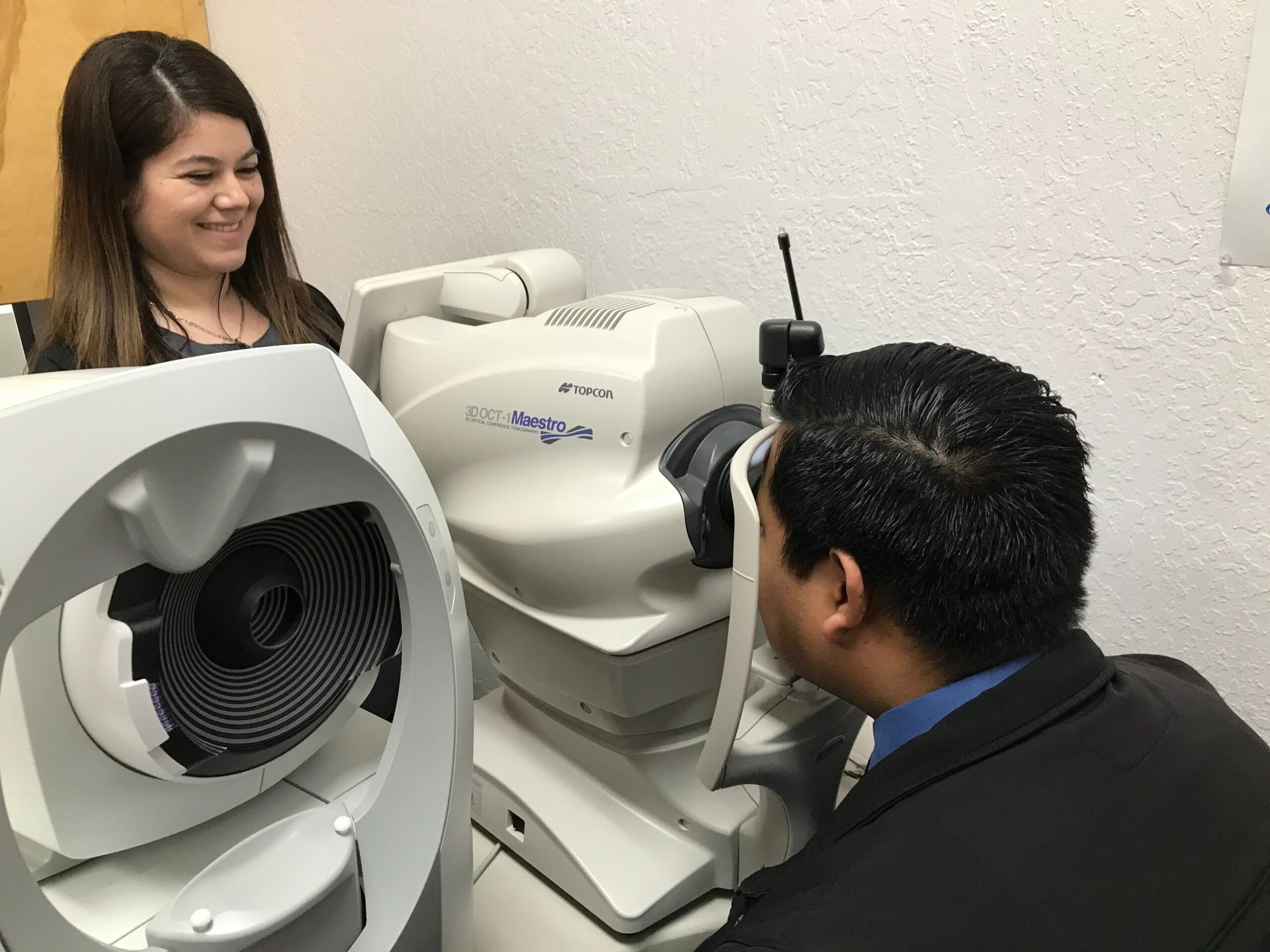
None of this is a reason for alarm. It is a reason to wear sunglasses on ordinary days rather than only bright ones. We monitor these changes at your exams. See senior and low-vision care.
What to look for in sunglasses
UV rating, not darkness. A dark lens without UV protection is worse than no sunglasses at all, because the tint opens your pupil and lets more UV in. Look for lenses that block UVA and UVB.
Coverage. Wraparound or larger frames block light arriving from the sides. This matters more than lens darkness.
Polarization for glare. Polarized lenses cut reflected glare off roads, water, and car hoods. Useful for driving and around the coast, though polarization and UV protection are separate features.
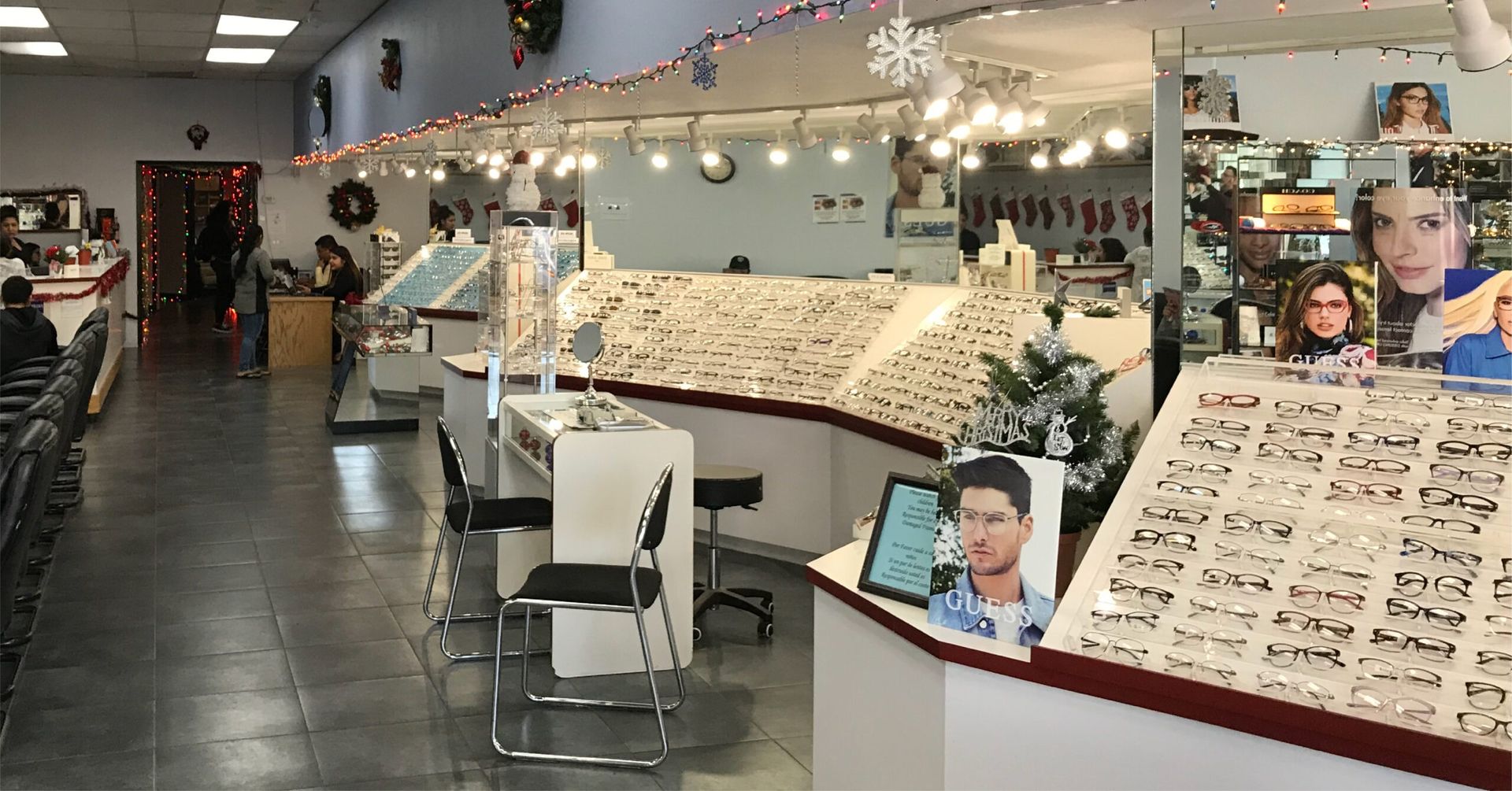
Prescription options. If you need correction, prescription sunglasses or photochromic lenses that darken outdoors mean you actually wear them. Our optical can go through the options. See personalized eyewear and lenses.
For children too. Children spend more time outdoors than most adults and their eyes transmit more UV. Sunglasses are not just an adult accessory.
Wind and dry eye
The other half of the Central Coast picture is air movement.
Wind accelerates tear evaporation. So does a car vent aimed at your face on the drive up the 101. If your eyes water in wind, that is often a dry-eye response rather than the opposite, because an unstable surface triggers reflex tearing.
Wraparound frames help here as well, by keeping moving air off the eye surface.
If irritation persists indoors too, the cause is usually the tear film itself. See common causes of dry, gritty, or watery eyes and what is meibomian gland dysfunction.
If you work outdoors
Sun and wind protection is one part of a bigger picture that also includes dust, debris, and chemicals. See eye care for outdoor and agricultural work.
Common questions
Do expensive sunglasses protect better?
Not necessarily. UV protection is inexpensive to manufacture. Price usually reflects optics, frame quality, and brand rather than UV blocking.
Are photochromic lenses enough?
They are convenient and provide UV protection, though most do not darken fully behind a windshield. Consider dedicated sunglasses for driving.
Can UV damage happen in one day?
Yes, in intense conditions. A short-term surface burn is painful and usually settles, but it is worth being examined.
My eyes water whenever I am outside.
Common, and usually a tear-film issue rather than too many tears. It is treatable. See dry eye treatment.
Come see the optical
We can check your current sunglasses for UV protection and talk through prescription options.
Request an appointment or call 805-925-9575.