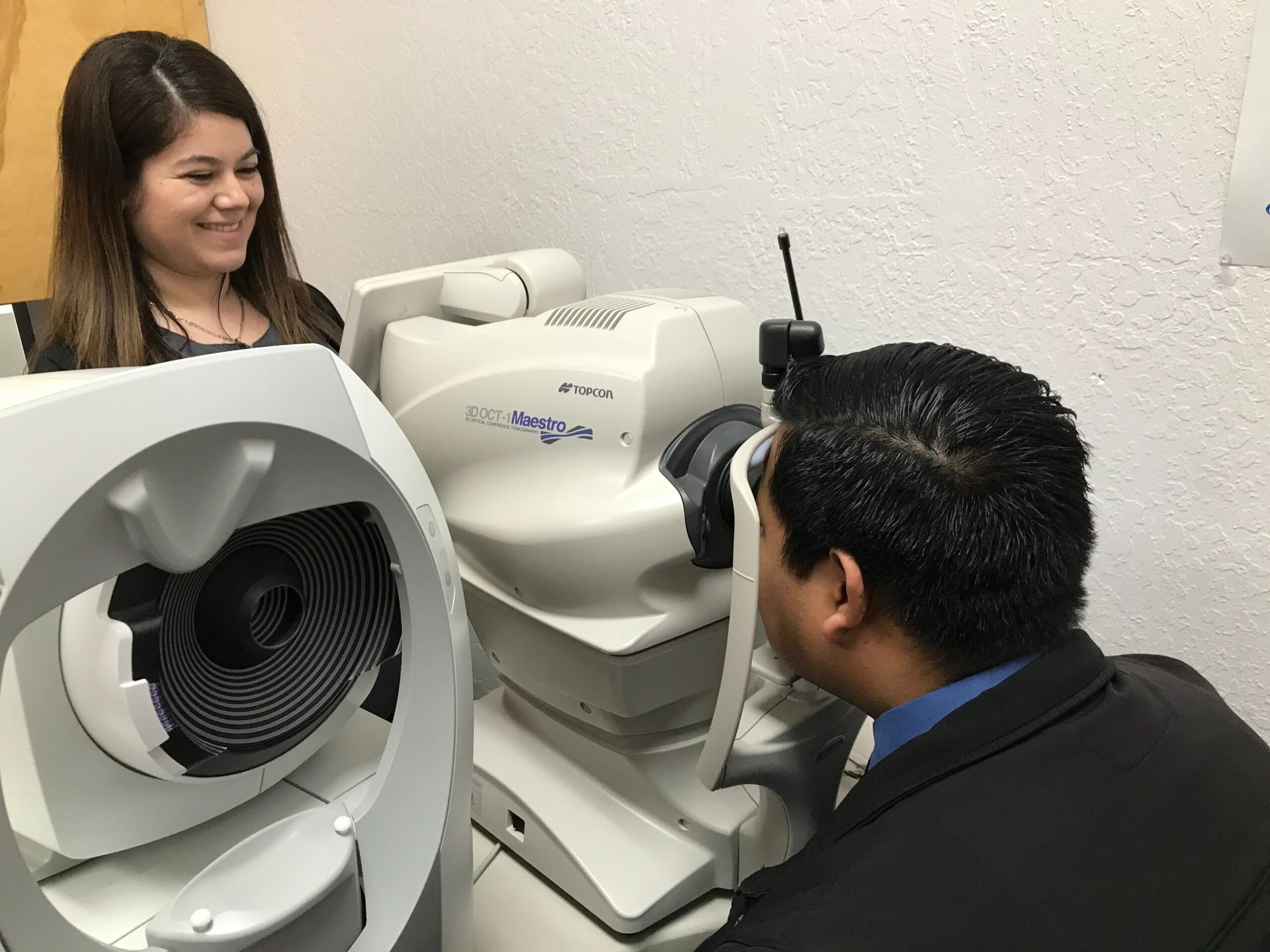
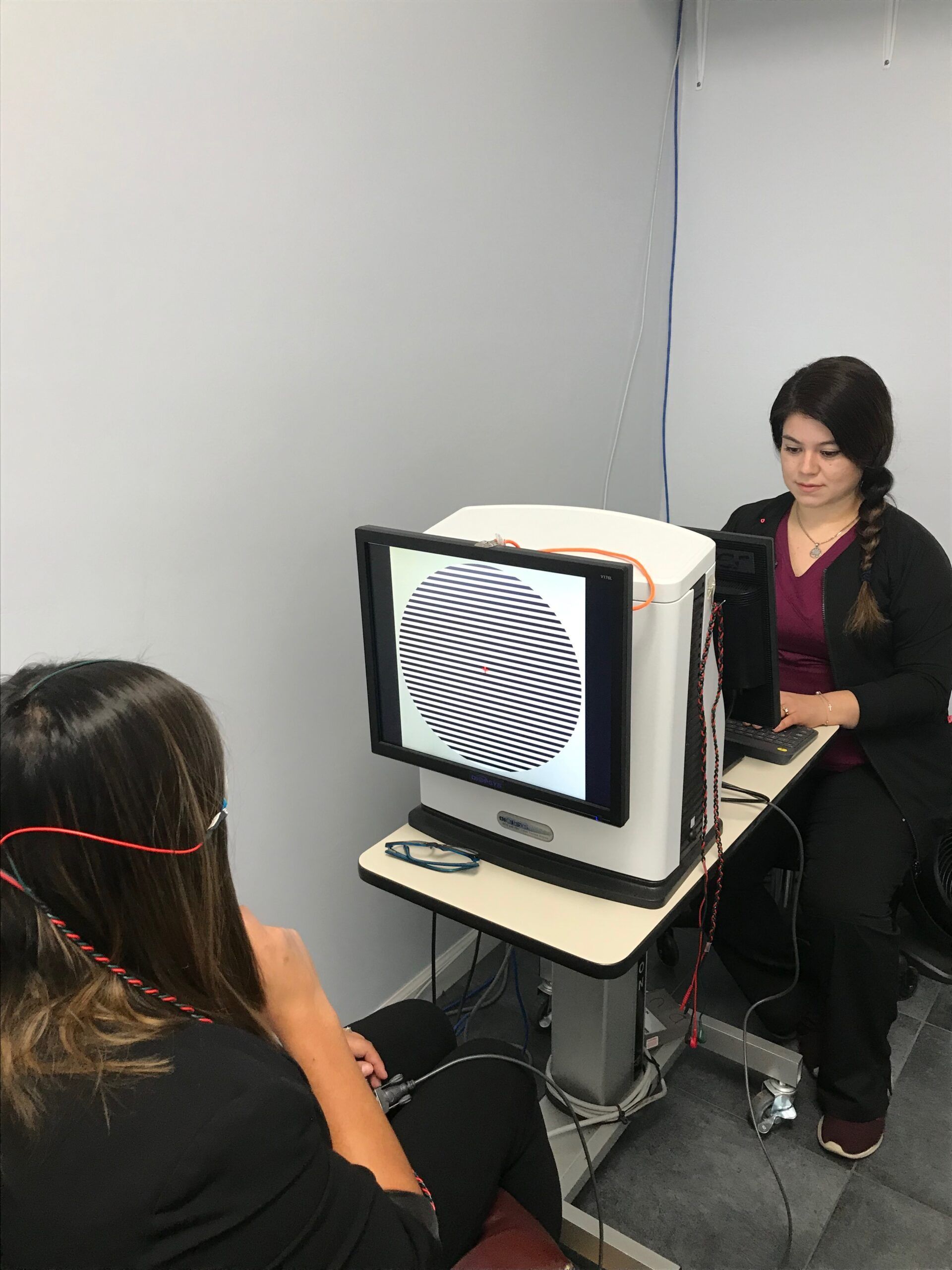
Some changes to vision are a normal part of aging. Others are conditions worth catching early. Telling them apart is most of what a senior eye exam is for.
The goal is practical: keep you reading, driving, and living independently for as long as possible.
What changes normally
- Near focus. Small print becomes harder from the forties onward. This is expected and correctable.
- Light and glare. Many people need more light to read comfortably and find night driving harder.
- Adjusting to darkness. Moving from bright to dim rooms takes longer than it used to.
These are common. They are not, on their own, a sign of disease.
What we watch for
Cataracts
The lens inside the eye gradually clouds. Vision becomes hazy, colors dull slightly, and glare from headlights increases. More in cataracts: what they are and when surgery is worth discussing.
Cataracts progress slowly, and having one does not mean surgery is due. We monitor them and discuss surgery when the effect on your daily life justifies it. That decision is yours, and it is usually not urgent. Surgery itself is done by an ophthalmologist: see optometrist vs. ophthalmologist.
Macular degeneration
Affects the central vision used for reading and recognizing faces. Early changes often cause no symptoms, which is why we look for them with imaging and document them over time. See macular degeneration.
Glaucoma
Risk increases with age. Damage is painless and starts in peripheral vision. See glaucoma monitoring.
Diabetic changes
If you have diabetes, annual exams matter regardless of how your vision feels. See diabetic eye care.
Why annual exams matter more after 60
Most of the conditions above develop slowly and quietly. There is no moment where you notice them starting. Sudden changes are the exception and should not wait: see flashes and floaters.
What makes them findable is comparison. Imaging from this year placed beside imaging from two years ago shows change that neither you nor we would otherwise perceive.
Low-vision care
When vision cannot be fully corrected with glasses or treatment, the question changes. It is no longer how do we restore this, but how do we make the most of what is there.
Dr. Prewett has experience in low vision. That work is practical and focuses on function:
- Magnification matched to the specific task, whether that is reading mail, a prescription label, or sheet music
- Lighting, which is often the single most effective change and the most overlooked
- Contrast, including simple adjustments at home that make edges and steps easier to see
- Positioning and technique for using the vision you have most effectively
Low vision does not mean total blindness. Most people we work with have usable vision, and the goal is to keep it working for the things that matter to them.
Driving
This is often the real worry behind the appointment, so we would rather discuss it directly than have you avoid asking.
We can tell you what your vision measures, how it compares to licensing requirements, and what might improve it. Sometimes the answer is an updated prescription or an anti-reflective coating for night glare. Sometimes it is a harder conversation. Either way you should have accurate information.
Common questions
Do I need surgery if I have a cataract?
Not necessarily, and not necessarily soon. Many people live with early cataracts for years. It becomes a question when it interferes with what you want to do.
Does Medicare cover my exam?
We accept Medicare. Coverage depends on the reason for the visit. Call our office and our team can help you understand what applies. See what Medicare covers for eye exams and glasses.
Can something be done if I already have vision loss?
Often yes, in the sense that function can be improved even when the underlying loss cannot be reversed. It is worth an appointment.
Can a family member come with me?
Yes, and it often helps. A second set of ears makes recommendations easier to remember.
Schedule an exam
Request an appointment or call 805-925-9575.