Dilating drops widen your pupil so the doctor can see the retina properly, including its outer edges. Without them, examining the back of the eye is like looking into a room through a keyhole.
Plan on several hours of brightness and blurry near vision afterward, and bring sunglasses.
Why it is worth it
Many of the conditions we look for sit at the back of the eye and cause no symptoms early on: diabetic changes, macular changes, retinal tears, and optic nerve findings.
A dilated view is how those get found while they are still small. It is particularly important if you have diabetes, if you are being monitored for a retinal condition, or if you have new flashes and floaters.
What happens
- Drops go in. They sting for a few seconds. That is the least comfortable part of the whole thing.
- You wait. It usually takes about 20 to 30 minutes to take full effect, and you will notice things brightening during that time.
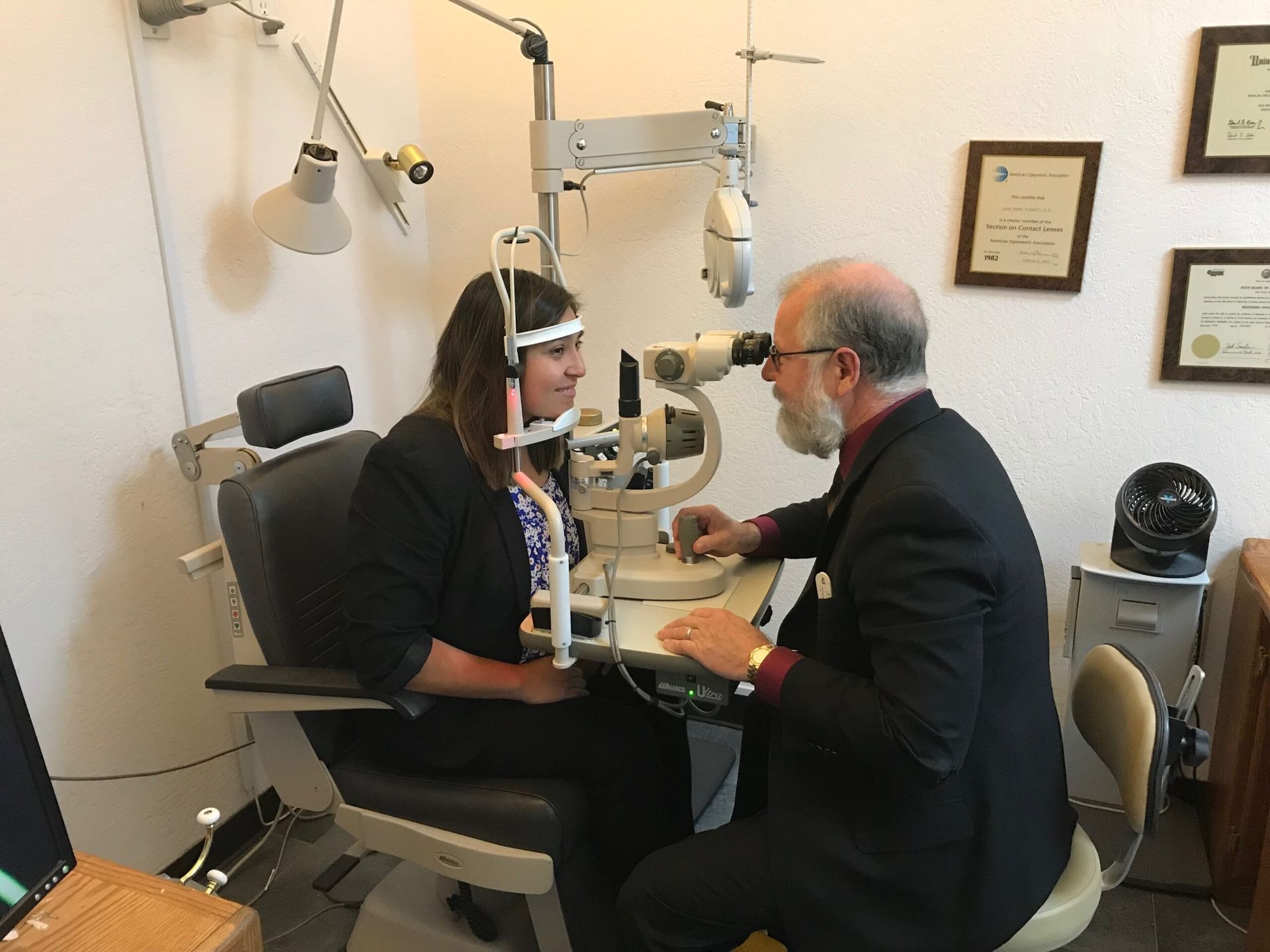
- The doctor examines the retina. A bright light is used, which is momentarily dazzling but not harmful.
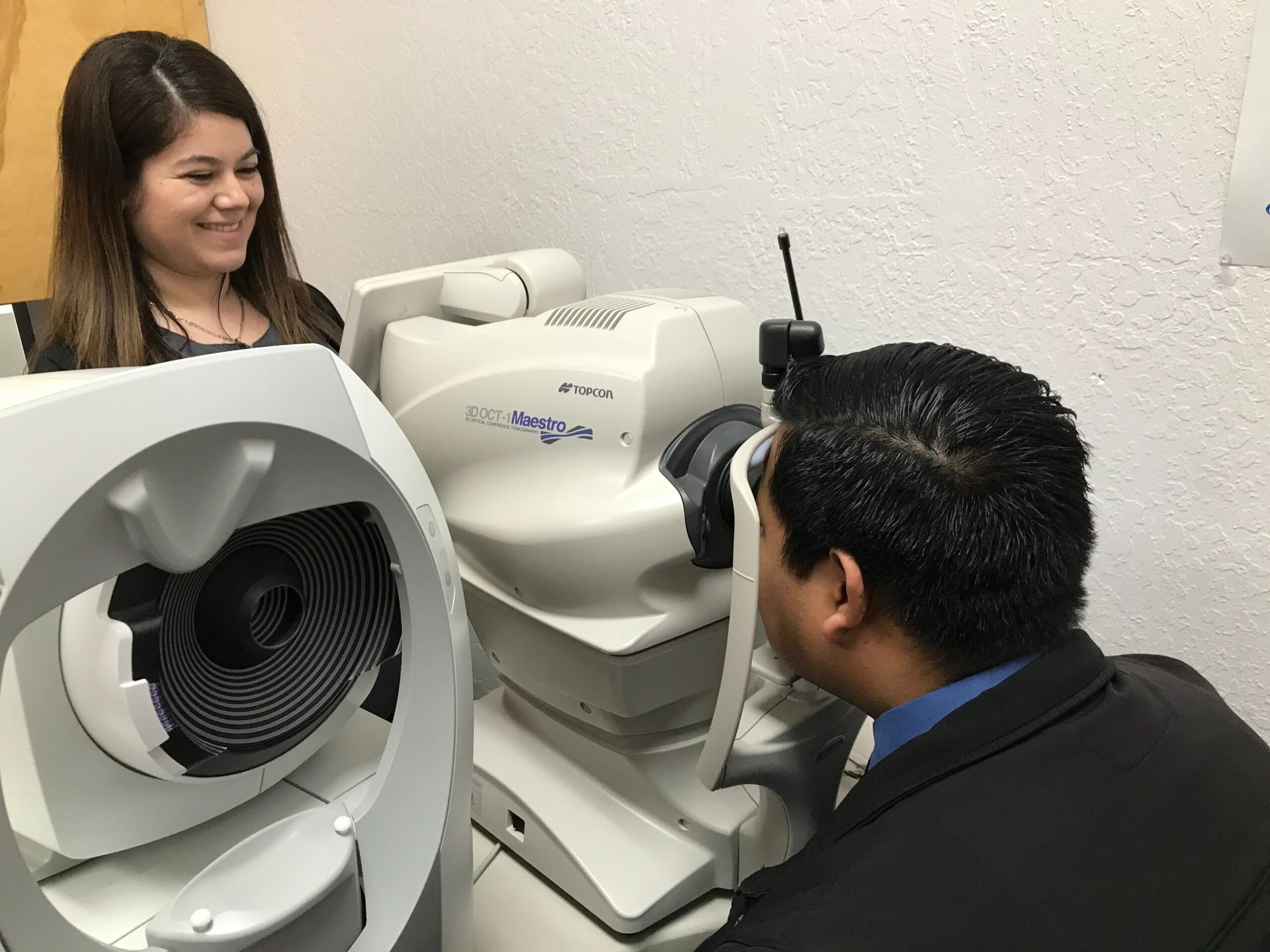
- Imaging may be added. See understanding OCT and retinal imaging.
How long it lasts
For most people the effect wears off within about four to six hours, though it varies. Lighter-colored eyes often stay dilated longer.
During that time expect:
- Light sensitivity, especially outdoors. This is the most noticeable part.
- Blurry near vision. Reading and phone screens are difficult. Distance vision is usually less affected.
- Trouble focusing quickly between distances.
Can you drive afterward?
Many people do drive, particularly if they have been dilated before and know how they react. But you are the one who has to judge it honestly.
Arrange a ride if it is your first time being dilated, if you are sensitive to light, if you are having other testing the same visit, or if you will be driving into bright sun or at dusk.
Bring sunglasses either way. If you forget, ask at the desk and we will give you a disposable pair.
Planning your day
Dilation is easier if you do not schedule it against something demanding.
Avoid booking a dilated exam right before detailed close work, a presentation, or anything requiring you to read for a few hours. A morning appointment often works well, since the effect has largely worn off by the afternoon.
Do you always need it?
No. The doctor recommends it based on your symptoms, health history, and what he needs to see. Some visits do not call for it, and some scans can be done without it.
If you have diabetes, expect it to be part of your annual exam. See why diabetic eye exams matter.
Common questions
Does it hurt?
The drops sting briefly. The exam itself does not hurt, though the light is bright.
Take them out for the drops. Bring your glasses, and give your eyes a little time before putting lenses back in.
Are there side effects?
Light sensitivity and blurred near vision are expected. Rarely, dilation can raise eye pressure in people with particular anatomy, which the doctor checks for.
Can I go back to work?
Depends on the work. Anything screen-based or detailed will be frustrating for a few hours.
What should I bring?
Sunglasses, and ideally a driver if you are unsure. See what to expect at your first visit.
Schedule an exam
Tell us when you book if you would prefer a morning appointment or need to plan around dilation.
Request an appointment or call 805-925-9575.