High blood pressure affects the small blood vessels in your retina, and those changes usually appear before you notice anything about your vision.
The retina is the only place in the body where blood vessels can be examined directly, without surgery. That makes an eye exam genuinely useful information about your circulation, not only your sight.
What we look for
During a dilated examination the doctor looks at the retinal vessels for signs that sustained pressure has been affecting them:
- Narrowing of the small arteries
- Changes where an artery and vein cross one another
- Small areas of bleeding
- Fluid or deposits in the retinal tissue
- Swelling at the optic nerve head, which is uncommon and more urgent
Collectively these are described as hypertensive retinopathy. Mild changes are common and often long-standing. More advanced changes suggest pressure that has been high for a while or has risen sharply.
Why this matters beyond your eyes
The vessels in your retina are similar in size to vessels elsewhere, including in the kidneys and brain.
So what we see is not only about vision. It is a visible sample of how small vessels throughout the body are handling the pressure. When findings are relevant, we can share them with your primary care physician so your care is connected.
Symptoms, and why you should not wait for them
Most people with hypertensive retinal changes notice nothing at all.
When symptoms do appear, they can include blurred vision, a change that comes on over days, or in more serious situations a sudden loss of vision in one eye. A sudden change should be treated as urgent rather than watched. See flashes and floaters for the symptoms that need prompt attention.
The absence of symptoms is not reassurance. It is the normal state of early changes.
How imaging helps
Retinal photography documents what your vessels look like today. Placing this year's images beside last year's is how gradual change becomes visible, and it is far more informative than any single view.
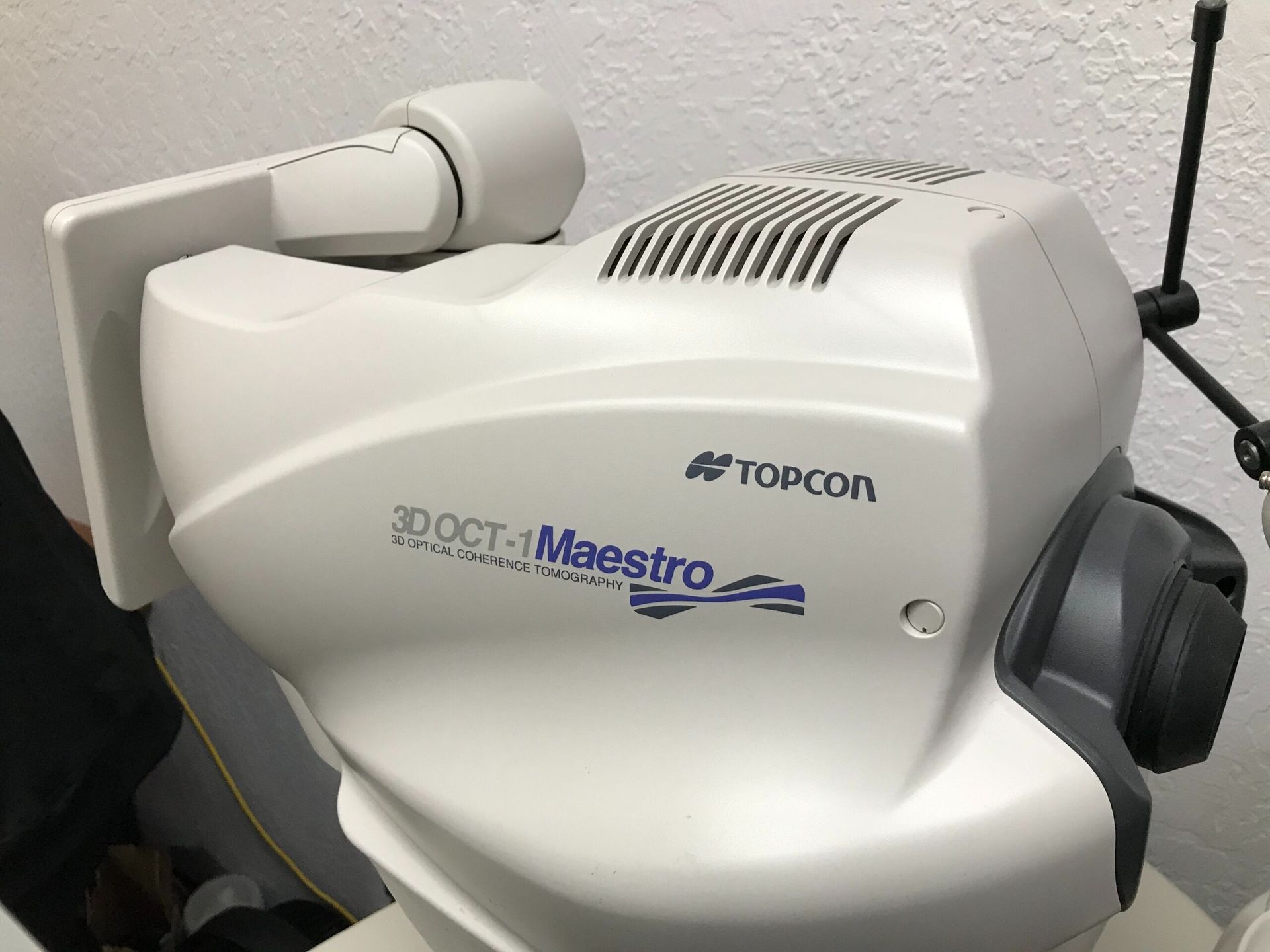
OCT imaging adds cross-sectional detail and can show swelling in the central retina that a photograph alone would not reveal. See understanding OCT and retinal imaging.
What we recommend
If you have high blood pressure, have your eyes examined regularly even when your vision seems fine. The doctor will give you an interval based on what he finds rather than leaving it open.
If you also have diabetes, the two together raise the stakes for the retina, and annual exams matter more. See why diabetic eye exams matter.
Common questions
No. They are separate measurements and one does not imply the other. We explain eye pressure in what does eye pressure mean.
Will the changes reverse if I control my blood pressure?
Milder changes can improve with better control. More advanced damage may not fully reverse, which is the argument for finding it early.
Do I need to be dilated?
Often, since a wider view of the retina is useful. Bring sunglasses and consider arranging a ride.
Is this billed to medical insurance?
Usually, since it is a medical evaluation rather than a routine prescription check. We accept Medicare and CenCal/Medi-Cal. See medical eye care.
Can you send findings to my doctor?
Yes. Tell us at check-in and we will coordinate.
Schedule an exam
If you are managing high blood pressure and it has been a while, an eye exam is a straightforward way to see how your small vessels are doing.
Request an appointment or call 805-925-9575.