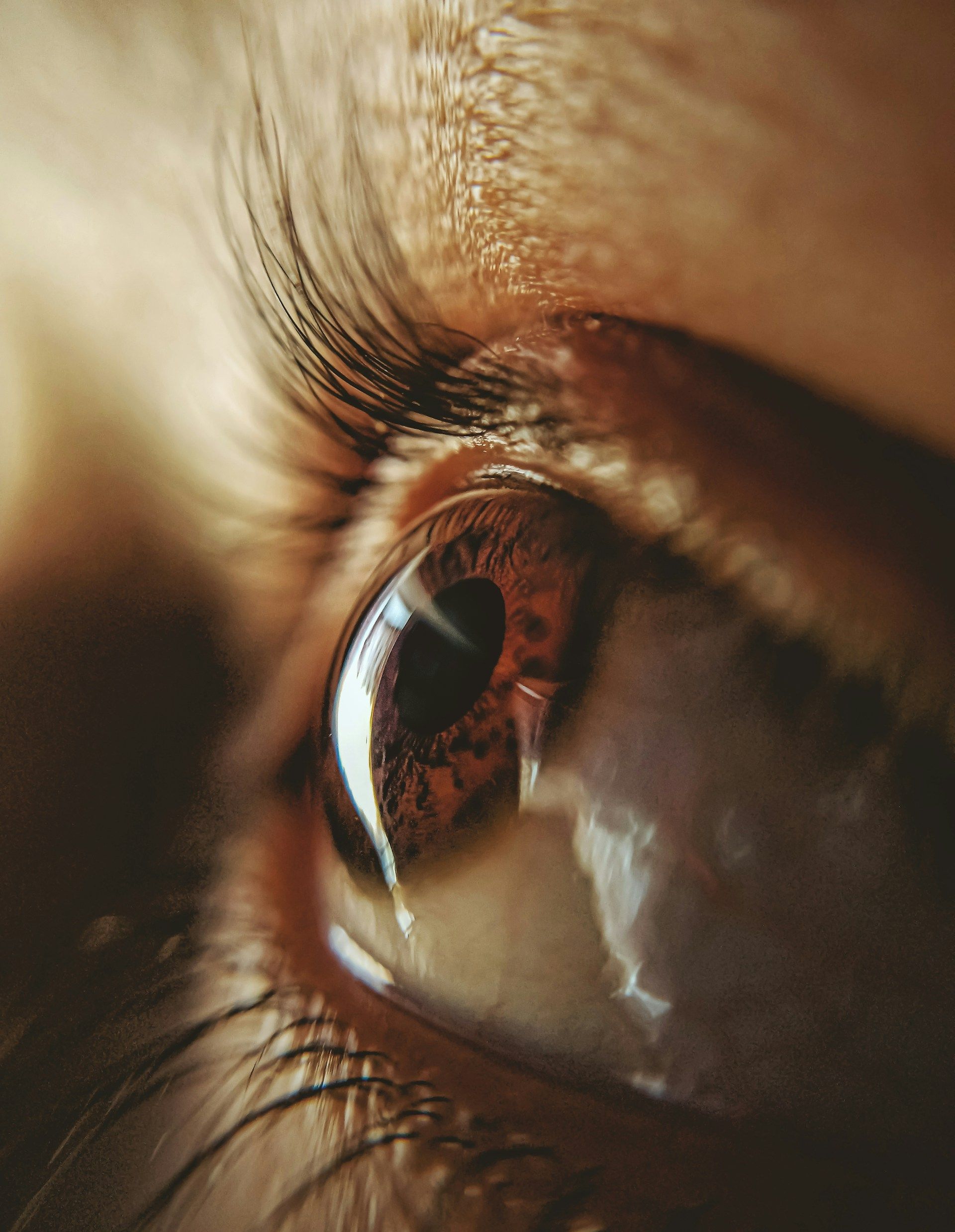
A cataract is the clear lens inside your eye gradually becoming cloudy. It is a normal age-related change, not a growth or a film over the eye.
Having a cataract does not mean surgery is due. Many people live with an early one for years without it affecting much.
What you notice
Cataracts develop slowly, which is why they are easy to miss. The change happens over years, and your brain adapts as it goes.
- Vision that seems hazy, as though you are looking through a smudged window
- Glare from headlights at night, or halos around lights
- Colors looking duller or slightly yellowed
- Needing more light to read comfortably
- A prescription that keeps changing more than it used to
Night driving is often the first thing that bothers people, because glare is where cataracts show up soonest.
What we do at your exam
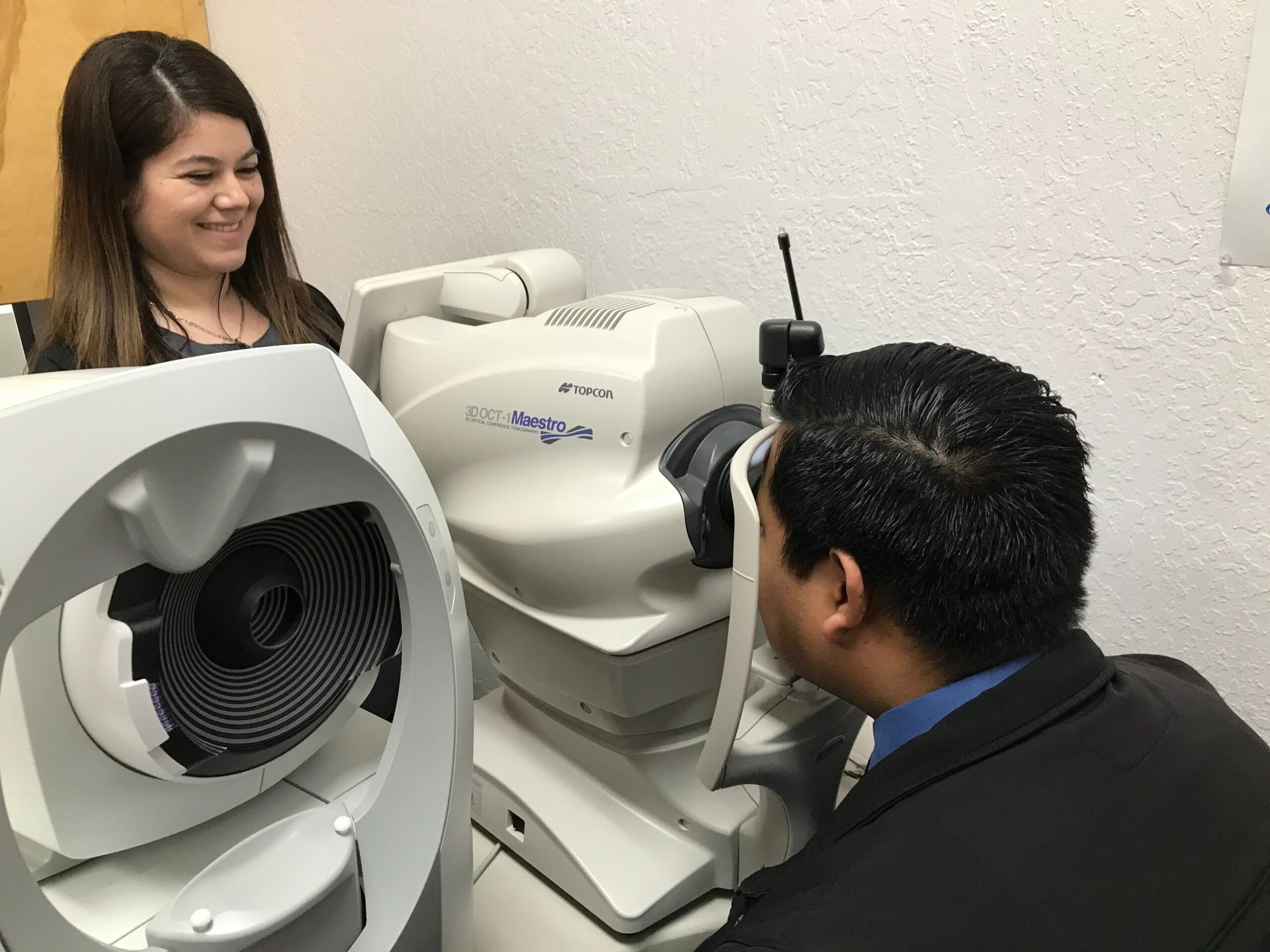
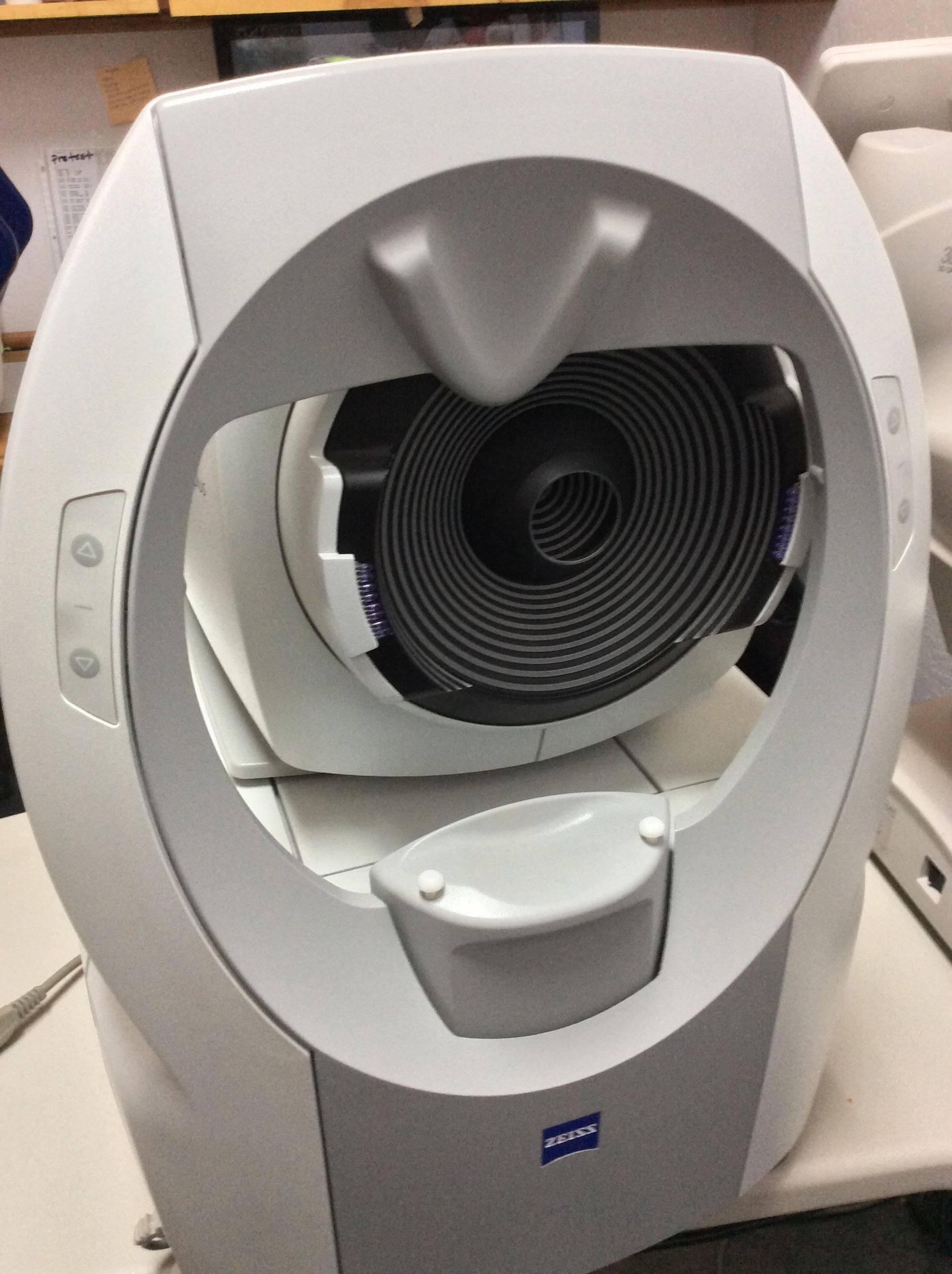
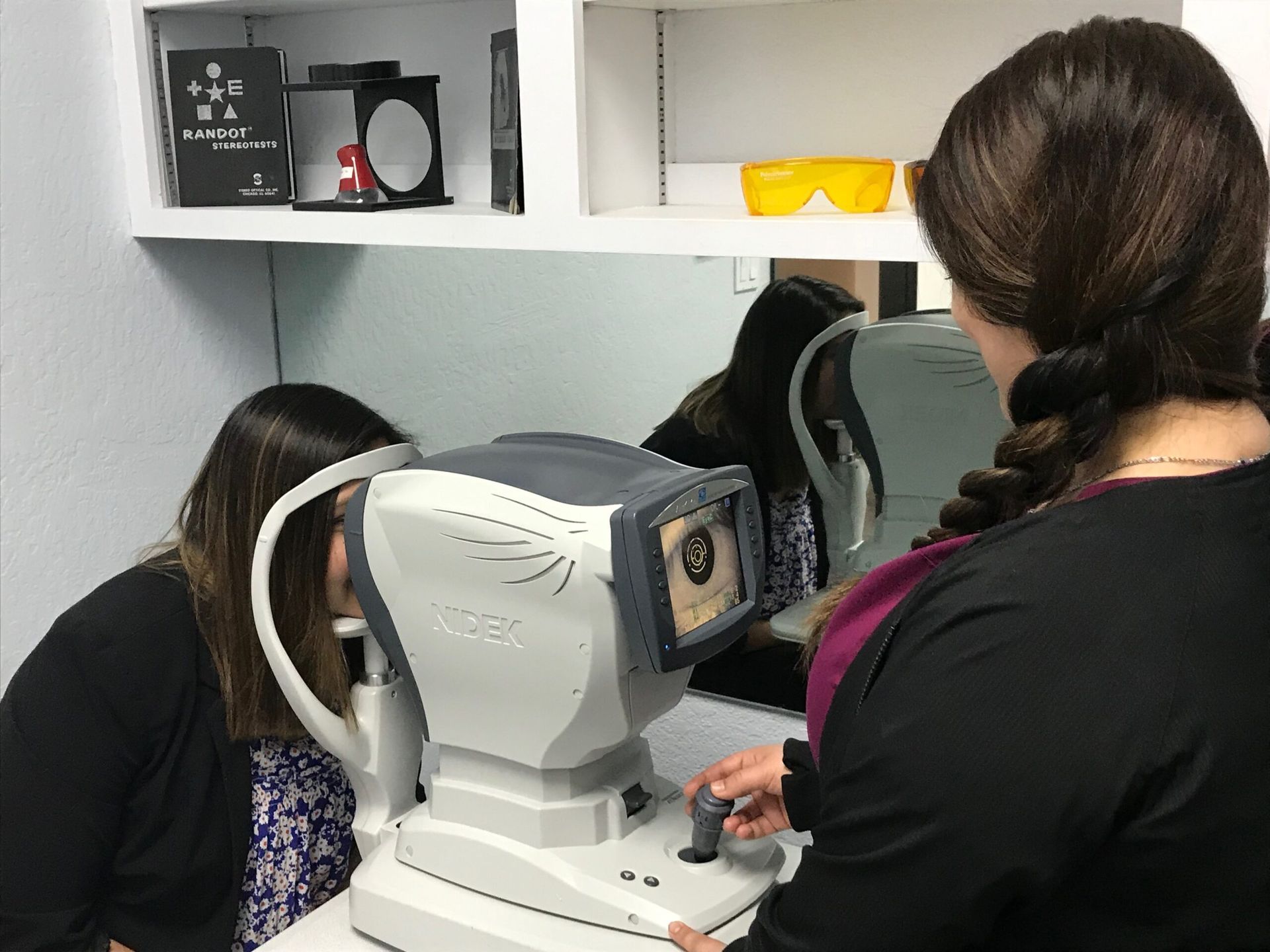
The doctor examines the lens directly under magnification and grades what he sees. We also check whether the cataract explains your symptoms, since blurred vision has other causes worth ruling out.
That distinction matters. If macular changes or another condition is contributing, removing the cataract will not fix everything, and you deserve to know that before surgery rather than after. See macular degeneration.
We document what we find so it can be compared at your next visit. Change over time is what tells us how quickly it is progressing.
When surgery becomes the conversation
The question is not how the cataract looks. It is what it stops you doing.
Surgery becomes worth discussing when the cataract interferes with things you want to do: driving at night, reading, working, or recognizing faces. That threshold is different for everyone, and it is genuinely your call.
There is usually no urgency. Waiting does not typically make surgery harder or riskier, so you are allowed to take your time.
Cataract surgery is performed by an ophthalmologist. When you decide the time has come, we help arrange the referral and stay involved in follow-up where appropriate. See optometrist vs. ophthalmologist.
Before then
While you are waiting, some practical things help:
- An updated prescription, since cataracts often shift it
- An anti-reflective coating to reduce night glare
- Better task lighting for reading
- Sunglasses outdoors, since UV exposure is one contributing factor over a lifetime. See sun, wind, and your eyes on the Central Coast
Common questions
Can cataracts be reversed without surgery?
No. No drop or supplement clears a cataract. What we can do is keep your prescription current and manage glare while it is still mild.
Will it keep getting worse?
Generally yes, though the pace varies a lot. Some progress over decades.
Does Medicare cover cataract surgery?
Cataract surgery is generally a covered medical procedure, and eyewear afterward is often handled differently than a routine glasses order. See what Medicare covers.
Can I have both eyes done?
Usually one at a time, with the second following after the first settles. Your surgeon will advise.
Am I too young for a cataract?
Most are age-related, but they can occur earlier, including after an eye injury or with certain medications and health conditions.
Get it checked
If night driving has become uncomfortable or your prescription keeps moving, come in and let us look.
Request an appointment or call 805-925-9575.