Age-related macular degeneration affects the macula, the small central part of the retina responsible for detailed vision. It is what you use for reading, recognizing faces, and driving.
Early changes usually cause no symptoms at all. That is the whole reason we look for them rather than waiting to be told about them.
What it does and does not affect
AMD affects central vision. It does not typically cause total blindness, because peripheral vision is usually preserved.
That distinction matters for how people live with it. Someone with advanced AMD may still move around independently while being unable to read ordinary print.
Dry and wet
Broadly there are two forms, and most people start with the first.
Dry AMD is the more common and slower form. Deposits called drusen build up under the retina and the tissue gradually thins. It often progresses over many years.
Wet AMD is less common and moves faster. New, fragile blood vessels grow beneath the retina and leak fluid or blood. It can change vision over days to weeks and needs prompt attention.
Dry can convert to wet, which is why monitoring continues even when things look stable.
Symptoms worth reporting promptly
- Straight lines appearing bent or wavy, such as door frames or window blinds
- A blurred or blank patch in the center of your vision
- Needing noticeably more light to read
- Colors seeming less vivid
- A sudden change in central vision, which should not wait
That last one matters most. A sudden distortion or central blur is the pattern associated with wet AMD, and it is more treatable the sooner it is seen.
How we monitor it
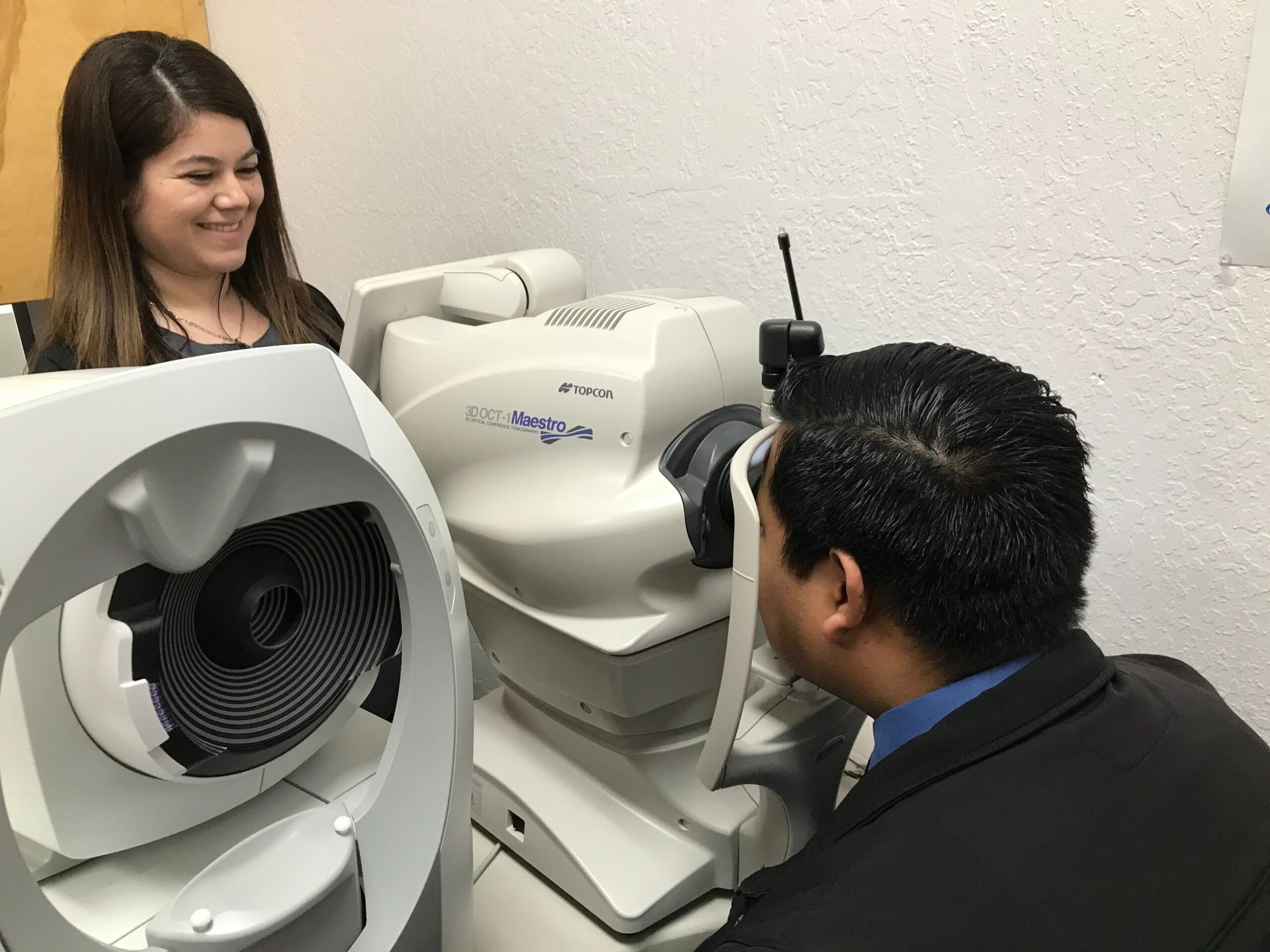
The macula sits in a part of the eye that cannot be assessed from the outside, so we use imaging.
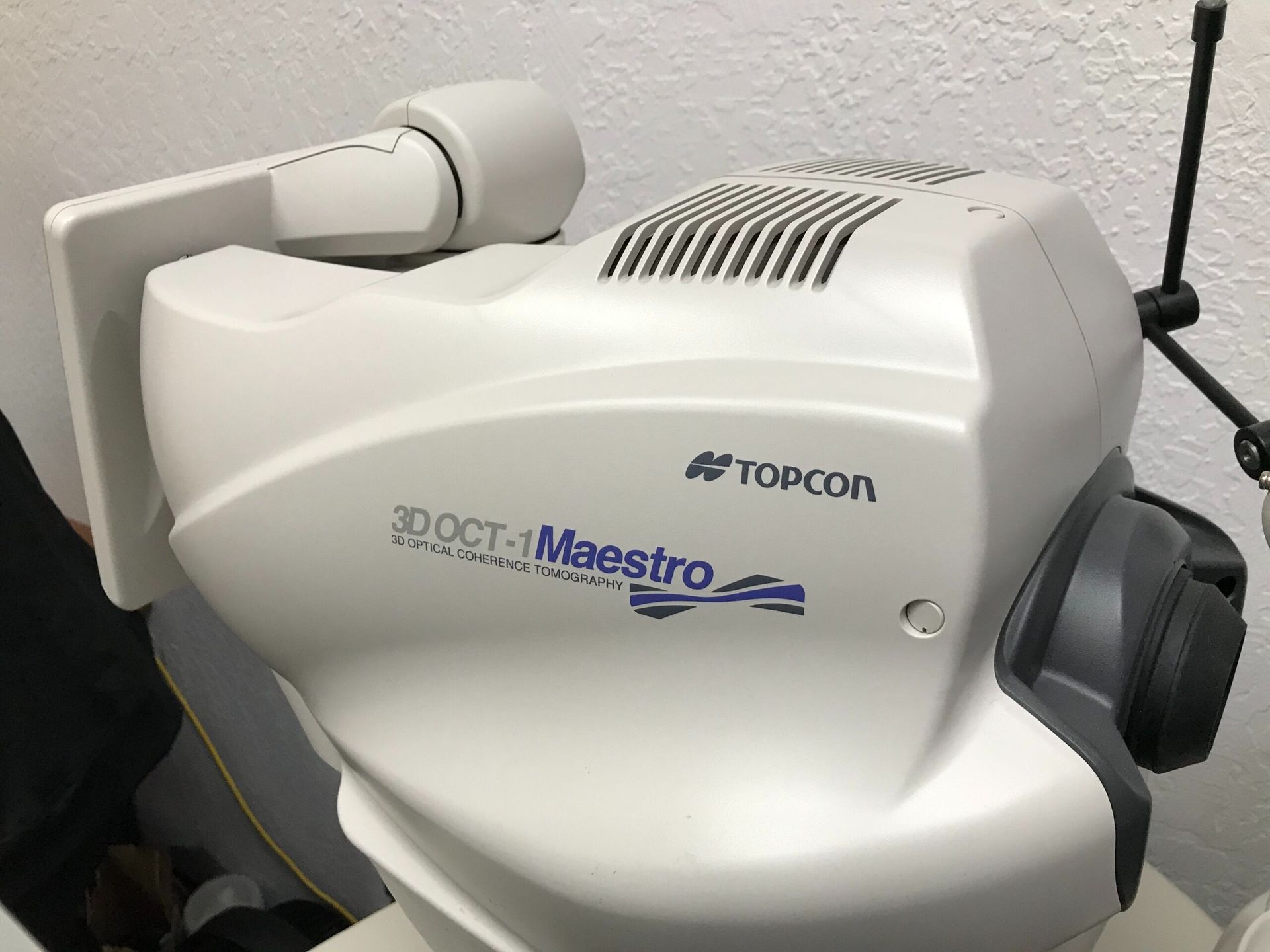
Retinal photography documents the macula so this year can be compared with previous years. OCT produces cross-sectional images of the retinal layers, which can show thickening, fluid, and thinning that a photograph alone would not reveal. See understanding OCT and retinal imaging.
Comparison is the point. A single scan establishes a baseline. A series is what shows change.
Checking at home
If you have been diagnosed, your doctor may ask you to check your vision at home with an Amsler grid, a simple square grid with a central dot. You look at the dot with one eye covered and note whether any lines look wavy or missing.
It takes seconds and it is one of the better ways to catch a change between appointments. Ask us for one if you do not have it.
Risk factors
Age is the main one. Others include family history, smoking, high blood pressure, and lifetime UV exposure.
Smoking is the most significant modifiable risk. Blood pressure is worth managing for the retina as well as the rest of you. See how high blood pressure affects your eyes.
Common questions
Can it be treated?
Wet AMD has treatment options that an ophthalmologist provides, and outcomes are generally better the earlier it is caught. Dry AMD is managed through monitoring and addressing risk factors. Your doctor may discuss whether nutritional supplements are appropriate for your particular type and stage.
Will I go blind?
Most people with AMD retain useful vision, particularly peripheral vision. Where central vision is affected, low-vision support focuses on function. See senior and low-vision care.
Should I be checked if it runs in my family?
Yes, and tell us. Family history changes how closely we watch.
Is it the same as cataracts?
No. Cataracts affect the lens at the front of the eye and are correctable with surgery. AMD affects the retina at the back. See cataracts.
Schedule an exam
If you are over 60, or AMD runs in your family, a documented baseline is worth having.
Request an appointment or call 805-925-9575.