Written for optometrists considering the practice.
The single biggest difference between practices is usually not the equipment. It is how much of the day the doctor spends doing things that require a doctor.
How a patient moves through
A patient arriving for a comprehensive exam is worked up before you see them.
- Front desk confirms information and insurance, and answers benefit questions. Our team handles Medicare and CenCal/Medi-Cal questions routinely, so those conversations do not land in the exam room.
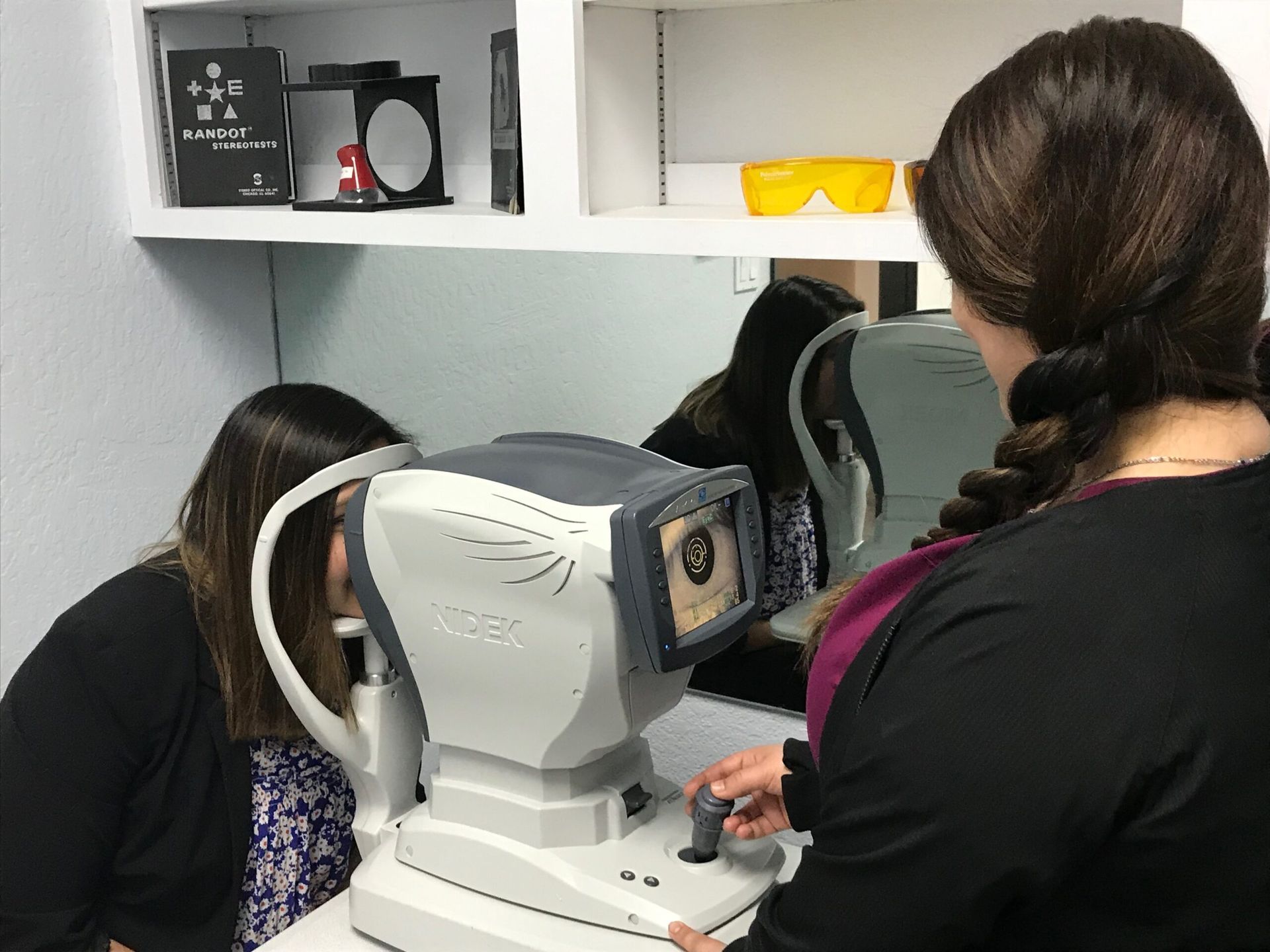
- Chairside staff run pretesting, including auto-refraction. Assistants here are trained to enter data, perform refractions, and assist with specialized testing.
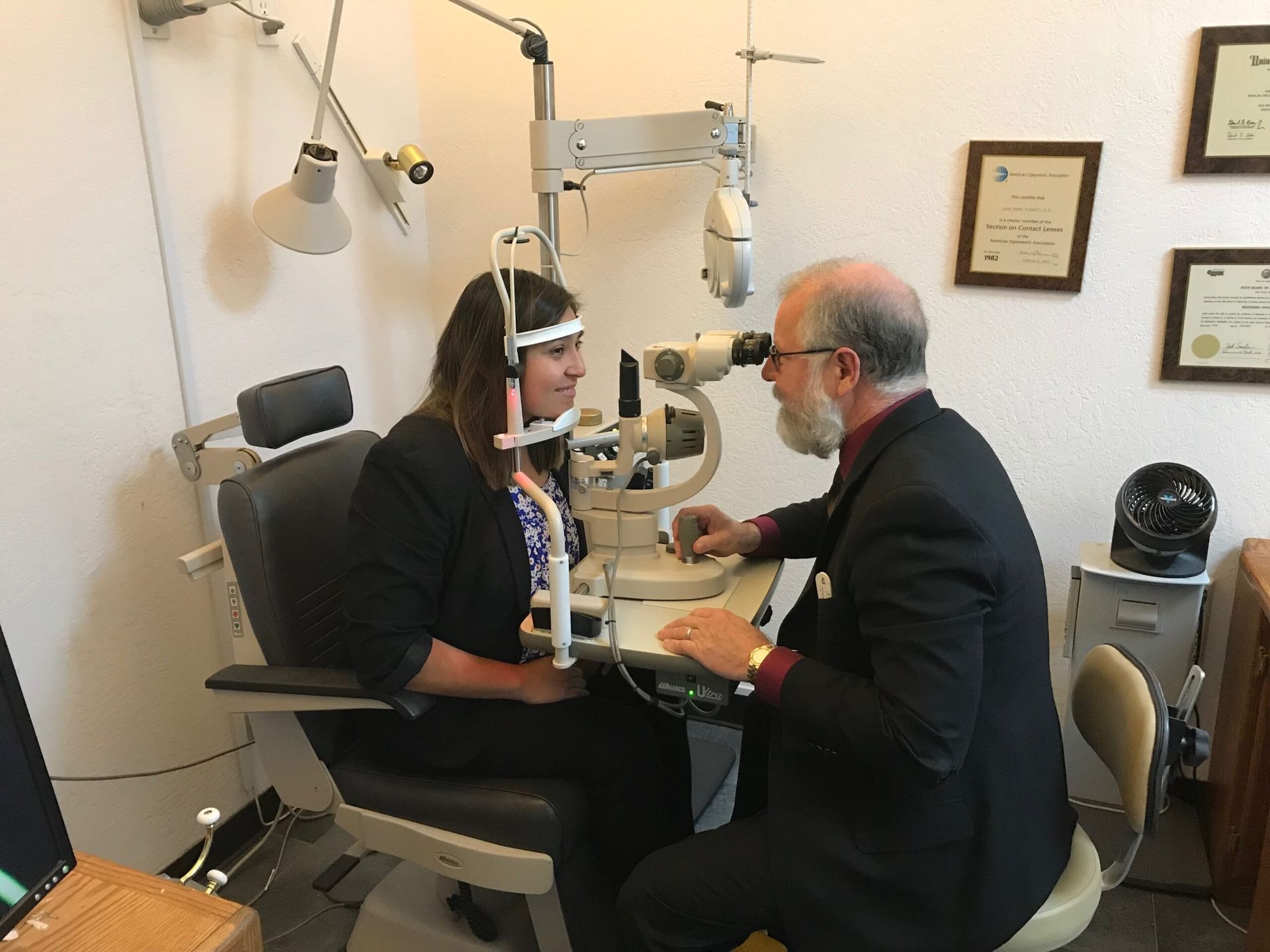
- You examine the patient, refine the refraction, evaluate ocular health, and decide what else is needed.
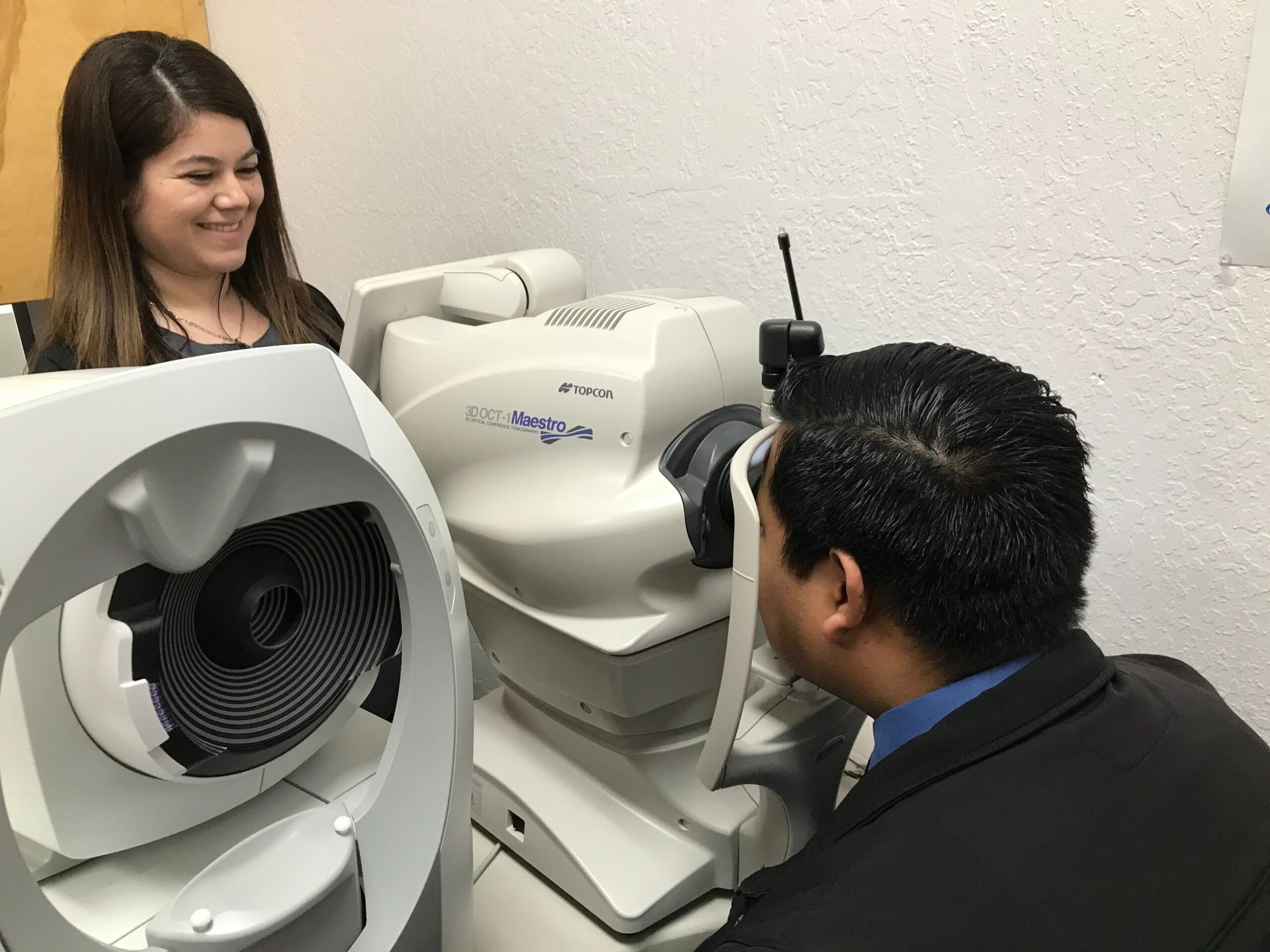
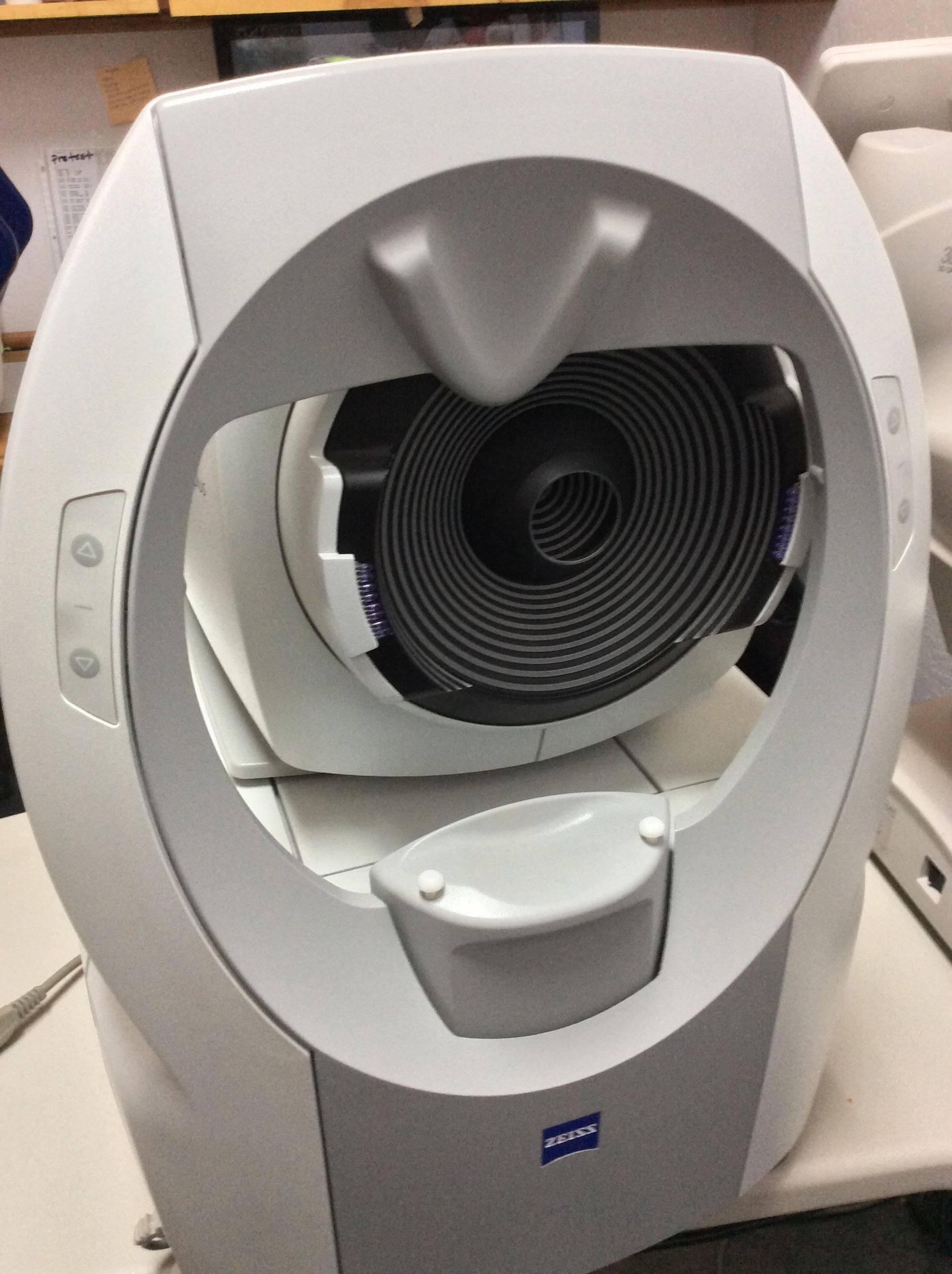
- Additional testing is run where you order it, with the equipment already in the building.
- Optical takes over if eyewear is part of the plan, including the measurements for personalized lens design.
The patient-facing version of this sequence is in what happens during a comprehensive eye exam.
What that means in practice
You arrive at the patient with measurements already taken and a chart already populated. Your time goes to the parts that need clinical judgment: interpreting findings, deciding what to test, explaining recommendations, and managing conditions over time.
It also means testing you order actually happens. In practices without trained support, advanced testing quietly stops being ordered because it is inconvenient. Here the workflow absorbs it.
The doctor's own emphasis
Dr. Prewett's stated preference is that patients understand why a test is being recommended, not just the name of the machine. That is reflected in how visits run: there is time built in for explanation, and the support model is what makes that time available.
If you value that and have worked somewhere that did not allow for it, this is the practical difference.
The dry-eye workflow
Dry eye is run as a dedicated clinic with recurring treatment plans rather than opportunistic advice at the end of a routine exam.
Staff are trained on the treatment equipment, which means a doctor prescribes and directs treatment rather than delivering every session personally. See developing a dry-eye specialty inside an established clinic.
Optical in the same building
The practice is both an optometry and an optical office, so eyewear decisions do not leave the building. Personalized lens measurement uses ZEISS iProfiler and iTerminal 2.
For a doctor this closes the loop. You can see how prescriptions are being dispensed and hear back when something is not working, rather than losing visibility once the patient walks out. See personalized eyewear and lenses.
A bilingual team throughout
The entire staff is bilingual in English and Spanish, which means language is handled at every step rather than at the exam-room door. See bilingual eye care in Santa Maria.
Common questions
How many staff are there?
About 20 across the practice, supporting one doctor currently.
Are the assistants trained on testing?
Yes, including data entry, refractions, and assisting with specialized testing.
Is the office busy?
Yes. It is a high-traffic practice with an established patient base.
What are the hours?
Monday through Thursday 9:00 a.m. to 6:00 p.m., Friday 9:00 a.m. to 2:30 p.m. Closed weekends.
Talk to us
The clearest way to understand how the day runs is to come and see it.
Explore careers or start a conversation.